

 www.woodsmithplans.com ```html
 Opening: Unleash Your Inner Craftsman with a DIY Lighted Workbench! Building a sturdy workbench is a rite of passage for any serious DIYer, woodworker, or hobbyist. Adding built-in lighting takes it to the next level, providing illumination exactly where you need it and eliminating shadows that can hinder precision. This guide will walk you through the process of creating your own lighted workbench, step-by-step.
Step 1: Planning and Materials: Before you start building, it's crucial to plan your workbench. Consider the size you need, the height that's comfortable for you, and the types of projects you'll be working on. Based on this, gather your materials:
- Lumber (2x4s for the frame, plywood or solid wood for the tabletop and shelves)
- Screws (various lengths, wood screws are ideal)
- Wood glue
- LED strip lights or shop light fixture
- Power drill and screwdriver
- Saw (circular saw, miter saw, or hand saw)
- Measuring tape and pencil
- Clamps
- Sandpaper
- Safety glasses and ear protection
- Wire connectors and electrical tape (if wiring the light fixture)
Step 2: Building the Frame: The frame is the backbone of your workbench. Cut the lumber according to your planned dimensions. Assemble the frame using screws and wood glue for added strength. Consider adding cross braces for extra stability, especially if you plan on working with heavy materials. Make sure all corners are square.
Step 3: Attaching the Tabletop: Once the frame is solid, it's time to attach the tabletop. Apply wood glue to the top of the frame and then carefully position the plywood or solid wood tabletop. Secure it with screws from underneath. Use plenty of screws to ensure a strong and secure bond. Countersink the screws to prevent them from protruding.
Step 4: Adding Shelves (Optional): Shelves provide valuable storage space for tools and materials. Cut the plywood or lumber for the shelves and attach them to the frame using screws and glue. Consider the spacing of the shelves based on the size of your tools and containers.
Step 5: Installing the Lighting: This is where the magic happens. Decide where you want to mount your lights. LED strip lights are versatile and can be easily attached under the front edge of the tabletop or above on a support beam. A shop light fixture can be mounted above the workbench for more general illumination. If wiring a fixture, be sure to disconnect power at the breaker before you start. Follow the manufacturer's instructions for wiring. Use wire connectors and electrical tape to ensure a safe and secure connection.
Step 6: Sanding and Finishing: Sand all surfaces of the workbench to smooth out any rough edges or splinters. Apply a finish of your choice to protect the wood and enhance its appearance. Options include varnish, polyurethane, or paint.
Step 7: Testing and Fine-Tuning: Plug in the lights and test them to make sure they are working properly. If necessary, adjust the position of the lights to achieve optimal illumination. Add any additional features or accessories, such as a vise, pegboard, or power strip.
Conclusion: A Bright Future for Your Projects! Congratulations, you've successfully built a lighted workbench! This enhanced workspace will not only make your projects easier and more enjoyable but also add a professional touch to your workshop. Enjoy the well-lit and organized haven you've created, and happy crafting!
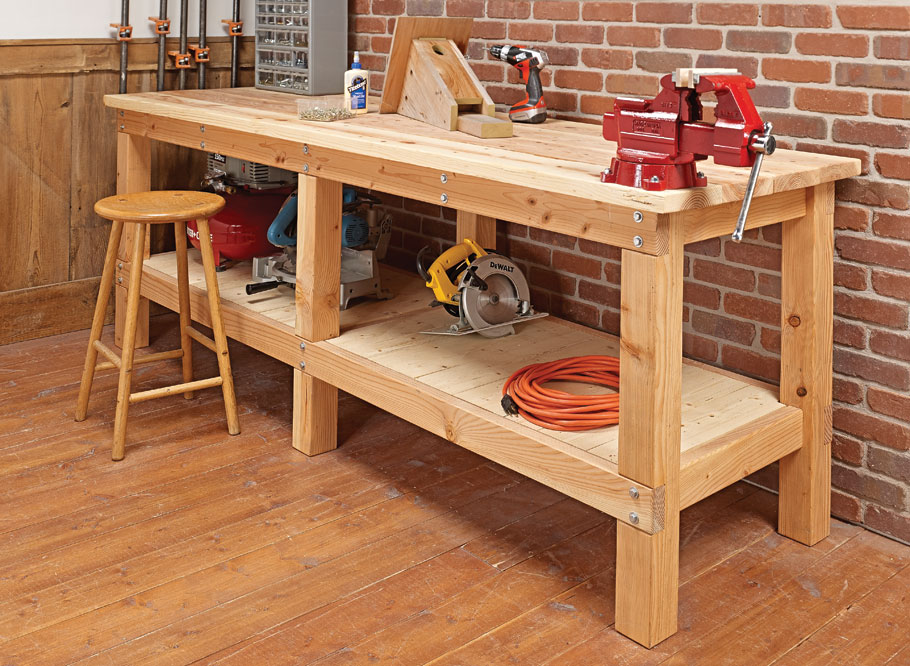
``` Heavy-duty Plank Workbench
www.woodsmithplans.com 14 Super-simple Workbenches You Can Build — The Family Handyman
 www.familyhandyman.com
 Simple Workbench Plans
 www.pinterest.com


0 komentar:
Posting Komentar