Jumat, 31 Oktober 2025

117+ Machine Sawit

What are milling machines made from at eva timmins blog storage.googleapis.com

Introduction: Crafting a DIY Cardboard Automaton Want to bring some mechanical magic to life? Building a cardboard automaton is a fantastic project that blends creativity, engineering, and a touch of whimsy. This guide walks you through creating your own moving sculpture using readily available materials.
Materials You'll Need:
  • Cardboard (various thicknesses)
  • Craft knife or scissors
  • Ruler
  • Pencil or pen
  • Glue (hot glue gun recommended for faster assembly)
  • Wooden skewers or dowels
  • String or wire
  • Decorative elements (paint, markers, beads, etc.)
  • Optional: Small gears or pulleys (can be sourced from old toys or purchased)
  • Step 1: Design and Planning Start with a simple design. Think about the movements you want your automaton to perform. Draw a sketch of your mechanism and the characters or scene it will depict. Consider the size of your automaton and plan accordingly. A simple wave or head nod is a great place to begin for beginners.
    Step 2: Cutting the Cardboard Pieces Carefully cut out all the cardboard pieces based on your design. Use a ruler and craft knife (or scissors) for precision. Remember to cut out the base, side supports, cams (rotating pieces that create movement), linkages (connecting rods), and the moving figures themselves. Make sure all your pieces fit together.
    Step 3: Constructing the Base and Support Structure Glue the side supports to the base. These supports will hold the cams, linkages, and moving elements. Ensure the supports are sturdy and properly aligned for smooth operation. Reinforce the joints with extra glue if necessary.
    Step 4: Building the Cam Mechanism Create your cams. These are typically circles or ovals of cardboard with an offset hole. The shape of the cam determines the type of movement it generates. Attach the cams to wooden skewers or dowels that will serve as axles. Place the axles within the side supports, making sure they can rotate freely.
    Step 5: Connecting the Linkages Cut and assemble the linkages, which are the connecting rods that translate the cam's rotation into linear movement for your figures. Attach one end of the linkage to the cam using glue or a small brad (if available), allowing it to pivot. Connect the other end of the linkage to the moving figure.
    Step 6: Assembling the Figures and Adding Movement Attach your figures to the linkages. Test the mechanism by manually rotating the cam axles. Adjust the linkages as needed to achieve the desired movement. Ensure everything moves smoothly and without obstruction. Address any friction points by lightly sanding or adjusting the alignment.
    Step 7: Decorating and Finishing Touches Once the mechanism is working smoothly, add decorative elements. Paint, draw, or embellish your automaton to bring it to life. Add details to your figures, background, and base to create a visually appealing piece. Consider adding a handle or crank to make it easier to operate.
    Conclusion: Your Automaton is Complete! Congratulations on creating your own cardboard automaton! This project is a testament to the power of creativity and simple mechanics. Experiment with different designs, cam shapes, and linkage configurations to create even more complex and fascinating automatons. This is a journey of learning and having fun, so embrace the process.

    What Are Milling Machines Made From At Eva Timmins Blog

    What are milling machines made from at eva timmins blog storage.googleapis.com

    Cnc Machining

    Cnc machining www.birminghamstopper.co.uk

    2011 Linear Cnc Machining Center Vl-1470 X*y*z Axis Travel 1400*700*700

    2011 linear cnc machining center vl-1470 x*y*z axis travel 1400*700*700 hzdtsk.en.made-in-china.com
    Read More..

    Kamis, 30 Oktober 2025

    50+ Wall Mounted Coat Rack With Shelf And Hooks

    Wall shelf with hooks underneath,24'' long wall mounted coat rack with shelf,coat rack wall www.walmart.com

    Opening: Creating Your Own Stylish and Functional Wall-Mounted Coat Rack Tired of coats and bags cluttering your entryway? A wall-mounted coat rack with a shelf and hooks is the perfect solution! Not only does it provide ample storage, but it can also add a touch of style to your home decor. This step-by-step guide will walk you through building your own, customized to fit your space and needs.
    Materials and Tools You'll Need: Here's a list of the essentials you'll need for this project. Adjust quantities based on your desired coat rack size:
  • Wood for the shelf and backboard (Pine, poplar, or reclaimed wood are good choices)
  • Coat hooks (Choose a style and quantity that suits your taste)
  • Wood screws (Various lengths for joining the wood and attaching hooks)
  • Wood glue
  • Sandpaper (Various grits, from coarse to fine)
  • Wood stain or paint (Optional, for finishing)
  • Polyurethane or sealant (Optional, for protection)
  • Measuring tape
  • Pencil
  • Saw (Circular saw, hand saw, or miter saw)
  • Drill with drill bits
  • Screwdriver (Or drill with screwdriver bits)
  • Clamps
  • Level
  • Safety glasses
  • Dust mask
  • Step 1: Planning and Design Before you start cutting wood, it's crucial to plan your coat rack's dimensions and layout. Consider:
  • Dimensions: Measure the available wall space and decide on the desired width, height, and depth of your coat rack.
  • Shelf Placement: Determine the height of the shelf above the hooks. A common distance is 8-12 inches.
  • Hook Spacing: Decide how many hooks you want and how far apart they should be spaced.
  • Wood Selection: Choose your wood based on your budget and desired aesthetic.
  • Sketch out your design with the measurements clearly labeled. This will serve as your blueprint.
    Step 2: Cutting the Wood Using your plan as a guide, carefully cut the wood to the required dimensions:
  • Backboard: This is the main support for the entire coat rack.
  • Shelf: This will provide a surface for storing hats, gloves, or decorative items.
  • Optional Side Supports: If you want added stability for the shelf, cut two small pieces of wood to act as side supports.
  • Be precise with your cuts to ensure a clean and professional look. Always wear safety glasses when using power tools.
    Step 3: Assembling the Coat Rack Now it's time to put the pieces together:
  • Attach the Shelf: Apply wood glue to the top edge of the backboard where the shelf will sit. Position the shelf and clamp it securely in place. Then, pre-drill pilot holes and screw the shelf to the backboard. If using side supports, glue and screw them in place under the shelf for added strength.
  • Let the Glue Dry: Allow the glue to dry completely according to the manufacturer's instructions. This usually takes at least a few hours.
  • Reinforce the Joints (Optional): For extra durability, you can add corner braces to the back of the coat rack where the shelf meets the backboard.
  • Step 4: Sanding and Finishing Once the coat rack is assembled, it's time to smooth out the surfaces and prepare it for finishing:
  • Sanding: Use sandpaper to smooth all edges and surfaces, starting with a coarser grit (80-120) and gradually moving to a finer grit (220). Pay special attention to any rough spots or splinters.
  • Dust Removal: Thoroughly remove all sanding dust with a tack cloth or vacuum cleaner.
  • Staining or Painting (Optional): Apply your chosen stain or paint according to the manufacturer's instructions. Apply multiple thin coats for a smoother finish. Allow each coat to dry completely before applying the next.
  • Sealing (Optional): Apply a coat of polyurethane or sealant to protect the wood from moisture and wear. This will also make it easier to clean.
  • Step 5: Attaching the Hooks Choose the placement of your hooks and install them securely:
  • Mark Hook Positions: Use a measuring tape and pencil to mark the desired locations for your hooks along the bottom edge of the backboard.
  • Pre-drill Pilot Holes: Pre-drill pilot holes at each marked location. This will prevent the wood from splitting when you screw in the hooks.
  • Attach Hooks: Screw the hooks into the pre-drilled pilot holes, making sure they are securely fastened.
  • Step 6: Mounting the Coat Rack Carefully mount the finished coat rack to the wall:
  • Locate Studs: Use a stud finder to locate the wall studs. Mounting the coat rack to studs will provide the most secure support.
  • Mark Mounting Holes: Hold the coat rack against the wall at the desired location. Use a level to ensure it's straight. Mark the locations for the mounting screws, aligning them with the studs.
  • Drill Pilot Holes: Drill pilot holes through the backboard at the marked locations, slightly smaller than the screws you will use to mount the coat rack.
  • Attach to Wall: Align the pilot holes in the coat rack with the studs in the wall. Drive screws through the backboard and into the studs, securing the coat rack in place.
  • Use Wall Anchors (If Necessary): If you cannot mount the coat rack directly to studs, use appropriate wall anchors to provide adequate support. Follow the wall anchor manufacturer's instructions.
  • Conclusion: Enjoy Your Handcrafted Coat Rack! Congratulations! You've successfully built and installed your own wall-mounted coat rack with a shelf and hooks. Enjoy the added storage and organization it brings to your entryway or any other room in your home. Feel free to customize your coat rack further with decorative elements to match your personal style.

    Wall Shelf With Hooks Underneath,24'' Long Wall Mounted Coat Rack With Shelf,coat Rack Wall

    Wall shelf with hooks underneath,24'' long wall mounted coat rack with shelf,coat rack wall www.walmart.com

    White Coat Rack Shelf With Hooks Wall Mounted Rustic Shelf With Hooks Painted Shelves Hooks For

    White coat rack shelf with hooks wall mounted rustic shelf with hooks painted shelves hooks for www.artofit.org

    Wall Mounted Coat Rack With Shelf, 24" Long White Wall Shelf With Hooks Beneath, Coat Rack Wall

    Wall mounted coat rack with shelf, 24" long white wall shelf with hooks beneath, coat rack wall www.walmart.com
    Read More..

    Rabu, 29 Oktober 2025

    145+ Workbench With Built-In Adjustable Height

    Ultrahd 72in adjustable height heavy-duty wood top workbench www.pinterest.com

    ```html
    Opening: Level Up Your Workspace with a DIY Adjustable Height Workbench!

    Tired of hunching over your workbench? Ready to build a space that adapts to you? This guide will walk you through creating your own sturdy, adjustable-height workbench. Get ready to improve your posture and your productivity!

    Step 1: Planning and Gathering Materials

    Before you start building, it's crucial to have a solid plan. Decide on the dimensions of your workbench. Consider the available space in your workshop and the types of projects you'll be working on. Common workbench dimensions are 60-72 inches wide, 24-36 inches deep, and a height adjustable from 30-48 inches. Once you have a plan, gather your materials. Here's a basic list to get you started:

    • 4x4 lumber for the legs
    • 2x4 lumber for the frame
    • 3/4 inch plywood or MDF for the workbench top
    • Adjustable height legs (either pre-made or DIY more on that later)
    • Wood screws (various sizes)
    • Wood glue
    • Sandpaper (various grits)
    • Wood finish (polyurethane, varnish, or oil)

    Tools you'll need:

    • Circular saw or table saw
    • Drill/driver
    • Screws
    • Measuring tape
    • Level
    • Clamps
    • Safety glasses
    • Hearing protection
    Step 2: Building the Workbench Frame

    The frame provides the structural support for your workbench. Cut the 2x4 lumber to the desired length and width of your workbench. Assemble the frame using wood screws and wood glue. Ensure the corners are square and the frame is level. Use clamps to hold the frame together while the glue dries. Consider adding cross braces to the frame for added stability, especially if you plan on storing heavy items under the workbench.

    Step 3: Installing the Adjustable Height Mechanism

    This is where the magic happens! You have two main options for adjustable height:

  • Option 1: Pre-made Adjustable Legs: Purchase a set of commercially available adjustable workbench legs. These often come with detailed instructions for installation. Typically, you'll attach mounting plates to the inside of your frame and then secure the legs to the plates.
  • Option 2: DIY Adjustable Legs: This is more involved but allows for greater customization. One method is to use a "leg within a leg" design. The 4x4 legs will act as the outer legs. You then create inner legs that slide inside the 4x4s. You can drill holes at regular intervals through both the inner and outer legs and use bolts and nuts to lock the inner leg at the desired height. Make sure the fit is snug to prevent wobbling, but loose enough to allow for easy adjustment.
  • Whichever method you choose, carefully follow the manufacturer's instructions or your own design to ensure the adjustable height mechanism is installed correctly and securely.

    Step 4: Attaching the Workbench Top

    Cut the plywood or MDF to the desired size for your workbench top. Place the top on the frame, ensuring it overhangs the frame slightly on all sides (typically 1-2 inches). Secure the top to the frame using wood screws. Drill pilot holes before inserting the screws to prevent the wood from splitting. Apply wood glue between the frame and the top for added adhesion.

    Step 5: Sanding and Finishing

    Sand the entire workbench, including the top, frame, and legs, using progressively finer grits of sandpaper. Start with a coarser grit (e.g., 80-grit) to remove any imperfections, then move to a medium grit (e.g., 120-grit), and finally a fine grit (e.g., 220-grit) for a smooth finish. Wipe away the sanding dust with a clean cloth. Apply your chosen wood finish according to the manufacturer's instructions. Multiple coats of finish will provide better protection. Allow each coat to dry completely before applying the next.

    Step 6: Adding Accessories (Optional)

    Consider adding accessories to your workbench to further enhance its functionality. Some popular options include:

    • A vise for clamping workpieces
    • Pegboard for tool storage
    • Drawers or shelves for storing materials
    • Power strip for convenient access to electricity
    • Built in lighting

    Customize your workbench to suit your specific needs and preferences.

    Conclusion: Enjoy Your New Adjustable Height Workbench!
    You Might Also Like: 153 Boat Build

    Congratulations! You've successfully built your own adjustable height workbench. Take a moment to admire your handiwork and enjoy the benefits of a customized workspace that adapts to your needs. Remember to always prioritize safety when working in your shop and maintain your workbench to keep it in good condition for years to come. Happy building!

    ```

    Amazon.com: Adjustable Height Workbench

    Amazon.com: adjustable height workbench www.amazon.com

    Adjustable Height Workbench

    Adjustable height workbench jack-bench.com

    Ultrahd 72in Adjustable Height Heavy-duty Wood Top Workbench

    Ultrahd 72in adjustable height heavy-duty wood top workbench www.pinterest.com
    Read More..

    Selasa, 28 Oktober 2025

    65+ Garden Wood Project Ideas

    Fresno home and garden show happening at fairgrounds this weekend abc30.com

    Opening: Transforming Your Garden with DIY Wood Projects Ready to add some rustic charm and functionality to your outdoor space? Building your own garden wood projects is a rewarding experience that allows you to customize your garden to your exact needs and style. From simple planters to elaborate pergolas, the possibilities are endless. This guide will walk you through a step-by-step process for creating a basic garden planter box, perfect for adding a touch of greenery to your patio or balcony.
    Step 1: Planning and Materials Before you start cutting wood, you need a plan. Decide on the size and shape of your planter box. A good starting point is a square planter box, approximately 12 inches by 12 inches by 12 inches. This size is manageable and suitable for various plants. Gather your materials:
  • Four pieces of wood for the sides (12 inches x 12 inches)
  • One piece of wood for the bottom (12 inches x 12 inches)
  • Wood screws (1 1/4 inch or 1 1/2 inch)
  • Wood glue
  • Drill with drill bits (for pilot holes and driving screws)
  • Measuring tape
  • Pencil
  • Saw (hand saw or power saw)
  • Sandpaper
  • Wood sealant or stain (optional, for weather protection)
  • Step 2: Cutting the Wood Carefully measure and cut your wood pieces to the specified dimensions. Use a saw that's comfortable for you, whether it's a hand saw or a power saw. Precision is important for a well-constructed planter box. Ensure the edges are straight and clean. Double-check your measurements before cutting to avoid errors.
    Step 3: Assembling the Box Now it's time to put the pieces together. Apply wood glue to the edges of one side piece. Align it with the edge of the bottom piece. Use clamps to hold the pieces together while the glue dries. While the glue is wet, drill pilot holes through the side piece and into the bottom piece. This prevents the wood from splitting when you drive in the screws. Secure the pieces together with wood screws. Repeat this process for the remaining three side pieces, creating a box.
    Step 4: Sanding and Finishing Once the box is assembled, use sandpaper to smooth all the edges and surfaces. This will remove any splinters and create a clean, professional look. If you plan to leave the planter box outdoors, apply a wood sealant or stain to protect it from the elements. This will help prevent rot and extend the life of your planter box. Follow the manufacturer's instructions for application.
    Step 5: Adding Drainage Proper drainage is crucial for healthy plant growth. Drill several drainage holes in the bottom of the planter box. This will allow excess water to escape, preventing root rot. The number of holes will depend on the size of your planter, but a good rule of thumb is to drill at least four holes, spaced evenly apart.
    Conclusion: Enjoy Your New Garden Planter Congratulations! You've successfully built your own garden planter box. Now you can fill it with your favorite plants, flowers, or herbs and enjoy the beauty and functionality it adds to your outdoor space. Consider building more planters of different sizes and shapes to create a personalized garden display. Remember to maintain your planter box by occasionally cleaning it and reapplying sealant as needed. With a little effort, your DIY planter box will provide years of enjoyment.

    Gardening Talk Radio Show

    Gardening talk radio show www.gardenamerica.com

    Fresno Home And Garden Show Happening At Fairgrounds This Weekend

    Fresno home and garden show happening at fairgrounds this weekend abc30.com

    Garden Center

    Garden center www.gardencentermag.com
    Read More..

    Senin, 27 Oktober 2025

    158+ Woodworking For Mere Mortals

    Woodworking for beginners: everything first-timers need to know www.familyhandyman.com

    ```html
    Introduction: Crafting Your Own Simple Wooden Box So you're ready to embark on a woodworking adventure? Building a simple wooden box is a fantastic starting point. This project is approachable for beginners, requiring minimal tools and yielding a satisfying result. Follow these steps, and you'll have a functional and decorative box in no time.
    Materials & Tools You'll Need Before we begin, gather everything you'll need. This will streamline the process and prevent frustrating interruptions.
  • Wood (Pine, Poplar, or any softwood are good choices for beginners) – enough for your desired box dimensions. Aim for 1/2" or 3/4" thickness.
  • Wood Glue
  • Clamps (bar clamps or pipe clamps are ideal, but spring clamps can work for smaller boxes)
  • Measuring Tape or Ruler
  • Pencil
  • Saw (Hand saw, Circular saw, or Table saw – choose what you're comfortable with)
  • Sandpaper (various grits, such as 80, 120, and 220)
  • Safety Glasses
  • Optional: Wood Finish (stain, varnish, polyurethane)
  • Step 1: Planning & Cutting the Pieces First, decide on the dimensions of your box. Consider what you plan to store inside to determine the length, width, and height. Remember to account for the thickness of the wood when calculating the final dimensions. Once you've settled on the size, carefully measure and mark the wood for the four sides (front, back, and two sides) and the bottom. Use your saw to cut the pieces accurately. Precision is key for a well-fitting box.
    Step 2: Assembling the Box – Gluing and Clamping Now comes the fun part: putting the box together. Apply wood glue to the edges of the side pieces that will connect to the front and back. Press the pieces together firmly, ensuring they are aligned. Use clamps to hold the pieces securely in place while the glue dries. It's a good idea to wipe away any excess glue with a damp cloth. Allow the glue to dry completely according to the manufacturer's instructions (usually at least a few hours, ideally overnight).
    Step 3: Attaching the Bottom With the sides glued and dried, it's time to attach the bottom. Apply wood glue to the bottom edges of the box frame. Place the bottom piece onto the glued edges, ensuring it is flush with the sides. Clamp the bottom in place and allow the glue to dry completely. You may also choose to use small nails or screws in addition to glue for extra strength, but be careful not to split the wood.
    Step 4: Sanding and Finishing Once the glue is completely dry, remove the clamps. Now it's time to refine the box. Use sandpaper, starting with a coarser grit (like 80 or 120) to smooth any rough edges and imperfections. Gradually move to finer grits (like 220) for a smooth finish. Pay attention to the corners and edges. After sanding, wipe away any sawdust with a clean cloth. If desired, apply a wood finish, such as stain, varnish, or polyurethane, according to the manufacturer's instructions. This will protect the wood and enhance its appearance.
    Step 5: Optional Lid Creation If you want to add a lid to your box, cut another piece of wood slightly larger than the opening of the box. You can then attach hinges to one side of the lid and the corresponding side of the box. Alternatively, you could create a simple slip-on lid that rests on top of the box. Consider adding a small knob or handle to the lid for easy opening.
    Conclusion: Admire Your Handiwork Congratulations! You've successfully built your own simple wooden box. Take a moment to admire your handiwork. You can now use your box for storage, decoration, or as a thoughtful handmade gift. This project provides a solid foundation for learning more complex woodworking skills. So keep practicing, and soon you'll be creating even more amazing things!
    ```

    Traditional Woodworking Index

    Traditional woodworking index woodandshop.com

    Woodworking For Beginners: Everything First-timers Need To Know

    Woodworking for beginners: everything first-timers need to know www.familyhandyman.com

    National Woodworking Month (april 2025)

    National woodworking month (april 2025) www.daysoftheyear.com
    Read More..

    Minggu, 26 Oktober 2025

    187+ Woodworking Plans For Hope Chest

    Free printable hope chest plans woodworkingchallenge.com

    ```html
    Opening: Building Your Own Hope Chest A hope chest, also known as a cedar chest or dowry chest, is a timeless piece of furniture. It's not just a beautiful storage solution; it's a vessel for memories, dreams, and heirlooms. Building your own hope chest allows you to customize it to your exact needs and style, creating a truly unique piece that will be cherished for generations. This guide will walk you through the process step-by-step, from gathering materials to applying the finishing touches.
    Step 1: Planning and Design The first step is to plan your hope chest's dimensions and design. Consider the space where it will be placed and the items you intend to store. Sketch out your design, including the overall size, lid style (flat, domed, hinged), and any decorative elements.
  • Decide on Dimensions: Measure the available space and consider the desired storage capacity.
  • Choose a Wood: Cedar is a popular choice for its aromatic properties and insect-repelling qualities, but other hardwoods like oak, cherry, or maple can also be used.
  • Select a Lid Style: Flat lids are simpler to construct, while domed lids add a more traditional touch.
  • Plan the Joinery: Consider using dovetail joints for strength and durability, or simpler joinery methods like butt joints with screws and glue.
  • Draw Detailed Plans: Create a detailed plan with precise measurements for all the components.
  • Step 2: Gathering Materials and Tools Once you have your plans, it's time to gather the necessary materials and tools.
  • Wood: Purchase enough lumber to build the chest, lid, and any internal dividers or trays.
  • Hardware: Hinges, latches, handles, and any decorative hardware you plan to use.
  • Fasteners: Screws, nails, and wood glue.
  • Finishing Supplies: Sandpaper (various grits), stain, sealant, varnish, or paint.
  • Tools: Table saw, miter saw, router (optional), drill, sander, clamps, measuring tape, square, safety glasses, and hearing protection.
  • Step 3: Cutting the Wood Carefully cut all the wood pieces according to your plans. Ensure accurate measurements and clean cuts for a professional-looking finished product.
  • Cut the Sides, Front, and Back: Use a table saw or circular saw to cut the main panels of the chest.
  • Cut the Bottom: Cut the bottom panel to fit snugly inside the assembled sides.
  • Cut the Lid: Cut the lid to the desired size and shape, allowing for a slight overhang.
  • Cut Decorative Elements: If your design includes decorative molding or trim, cut those pieces as well.
  • Step 4: Assembling the Chest Assemble the sides, front, back, and bottom of the chest using your chosen joinery method.
  • Apply Glue: Apply wood glue to all mating surfaces.
  • Clamp the Pieces: Use clamps to hold the pieces together securely while the glue dries.
  • Fasten with Screws or Nails: Reinforce the joints with screws or nails for added strength.
  • Check for Square: Ensure the chest is square before the glue dries completely.
  • Step 5: Building the Lid Construct the lid according to your chosen style.
  • Flat Lid: Simply glue and screw together pieces of wood to form a solid panel. You may want to add supports on the underside to prevent warping.
  • Domed Lid: This requires more advanced woodworking skills. You'll need to create curved supports and then attach thin strips of wood to form the dome shape.
  • Step 6: Sanding and Finishing Sand all surfaces of the chest and lid smooth, preparing them for finishing.
  • Start with Coarse Grit Sandpaper: Remove any imperfections or blemishes.
  • Gradually Increase Grit: Work your way up to finer grits for a smooth, polished surface.
  • Apply Stain or Paint: Choose a stain or paint that complements your décor. Apply evenly and allow to dry completely.
  • Apply Sealant or Varnish: Protect the finish with a sealant or varnish. Apply multiple coats, sanding lightly between each coat.
  • Step 7: Installing Hardware Install the hinges, latches, handles, and any other decorative hardware.
  • Position the Hinges: Mark the locations for the hinges on the chest and lid.
  • Attach the Hinges: Secure the hinges with screws.
  • Install the Latch: Install a latch to keep the lid securely closed.
  • Attach Handles: Add handles for easy lifting and moving.
  • Conclusion: A Timeless Treasure Congratulations! You have successfully built your own hope chest. This handcrafted piece is not only a functional storage solution but also a beautiful and meaningful addition to your home. With proper care, your hope chest will be cherished for generations to come, holding memories and dreams for years to come. Enjoy the process and the beautiful heirloom you've created.
    ```

    Hope Chest Woodworking Plans

    Hope chest woodworking plans fity.club

    Free Printable Hope Chest Plans

    Free printable hope chest plans woodworkingchallenge.com

    Hope Chest Woodworking Plans

    Hope chest woodworking plans fity.club
    Read More..

    Sabtu, 25 Oktober 2025

    155+ Decorative Wooden Bird Feeder

    New wooden bird feeder decorative stock image www.dreamstime.com

    Opening: Welcoming Our Feathered Friends! Building a decorative wooden bird feeder is a rewarding project that brings nature closer to your home. Not only will you provide a source of food for birds, but you'll also add a charming touch to your garden or yard. This guide will walk you through the steps to create a beautiful and functional bird feeder.
    Step 1: Gathering Your Materials Before you begin, make sure you have all the necessary materials. Here's a list of what you'll need:
    • Untreated wood (cedar or redwood are excellent choices for weather resistance) – approximately 1 inch thick
    • Wood glue
    • Exterior wood screws or nails
    • Saw (hand saw, circular saw, or jigsaw)
    • Drill with drill bits
    • Measuring tape or ruler
    • Pencil
    • Sandpaper (various grits)
    • Wood sealant or paint (exterior grade)
    • Optional: Decorative elements like small wooden trim, copper accents, etc.
    Step 2: Designing and Cutting the Pieces Start by sketching out your bird feeder design. Common designs include a simple platform, a covered feeder with a roof, or a hopper-style feeder. Once you have your design, determine the dimensions of each piece and cut the wood accordingly. Here's a basic example for a simple covered feeder:
    • Base: 12" x 12"
    • Sides (4 pieces): 6" high, angles to fit your roof style
    • Roof (2 pieces): 14" x 8"
    • Support Posts (4 pieces): 6" high
    Use your saw to carefully cut each piece. Accuracy is important for a well-constructed feeder.
    Step 3: Assembling the Frame Begin by attaching the four sides to the base. Apply wood glue to the edges of the base where the sides will connect. Then, use wood screws or nails to secure the sides to the base. Ensure the corners are square for a sturdy foundation. After that, attach the four support posts inside the corners of the base, using glue and screws/nails. These posts will help support the roof.
    Step 4: Building the Roof Take the two roof pieces and attach them to form a peak. Apply wood glue along the edges where the pieces will meet. Secure them with screws or nails. Once the glue has dried, attach the roof to the top of the support posts. Glue and screw/nail the roof to the posts for a strong, weatherproof seal.
    Step 5: Sanding and Finishing Once the bird feeder is fully assembled, sand all the surfaces to remove any rough edges and splinters. Start with a coarse grit sandpaper and gradually move to finer grits for a smooth finish. After sanding, apply a wood sealant or exterior-grade paint to protect the wood from the elements. This will help prolong the life of your bird feeder. Allow the sealant or paint to dry completely before proceeding.
    Step 6: Adding Decorative Touches (Optional) This is where you can personalize your bird feeder! Add decorative wooden trim around the edges of the roof or base. You could also incorporate copper accents or other embellishments to enhance its visual appeal. Be sure any materials you use are safe for birds and weather-resistant.
    Step 7: Filling and Mounting Once the bird feeder is dry and finished, it's time to fill it with birdseed! Choose a birdseed mix that is suitable for the birds in your area. Mount your bird feeder in a location that is easily accessible to birds, but also safe from predators like cats. You can hang it from a tree branch, mount it on a pole, or place it on a deck railing.
    Conclusion: Enjoying Your Handiwork! Congratulations! You've successfully built your own decorative wooden bird feeder. Now, sit back, relax, and enjoy watching the birds flock to your feeder. Remember to regularly clean your bird feeder to prevent the spread of disease and keep your feathered friends happy and healthy. Happy birdwatching!

    Premium Photo

    Premium photo www.freepik.com

    New Wooden Bird Feeder Decorative Stock Image

    New wooden bird feeder decorative stock image www.dreamstime.com

    Decorative Wooden Bird Feeder

    Decorative wooden bird feeder www.pinterest.com
    Read More..

    Jumat, 24 Oktober 2025

    193+ Wall Mounted Mail Holder With Hooks

    200,000+ best wall photos · 100% free download · pexels stock photos www.pexels.com

    ```html
    Introduction: Wall Mounted Mail Holder with Hooks. This project will guide you through building a stylish and functional wall-mounted mail holder with hooks. It's a great way to organize your mail, keys, and other small items near your entryway. You'll need some basic woodworking skills and tools, but the project is relatively simple and can be completed in a weekend.
    Materials You'll Need:
    • A piece of wood for the back panel (approx. 12" x 18" size can be adjusted to your preference)
    • A piece of wood for the mail compartment base (approx. 4" x 10")
    • Two pieces of wood for the mail compartment sides (approx. 4" x 6")
    • Hooks (at least 3)
    • Wood glue
    • Screws (appropriate length for the wood thickness)
    • Wood filler (optional)
    • Sandpaper (various grits)
    • Paint or stain
    • Sealer (optional)
    • D-rings or picture hanging hardware
    Tools Required:
    • Saw (hand saw, circular saw, or miter saw)
    • Drill
    • Screwdriver
    • Clamps
    • Measuring tape
    • Pencil
    • Sandpaper block or sander
    • Paintbrush or staining pad
    Step 1: Cutting the Wood Pieces. Start by cutting all the wood pieces to the specified dimensions. Ensure accurate measurements for a neat and professional finish. Use a saw that you're comfortable and familiar with for clean and precise cuts. This step is crucial for the overall structure of the mail holder.
    Step 2: Assembling the Mail Compartment. Apply wood glue to the edges of the mail compartment base where it will connect to the side pieces. Position the side pieces on the base and clamp them together securely. Let the glue dry completely according to the manufacturer's instructions. Reinforce the joints with screws for added strength.
    Step 3: Attaching the Mail Compartment to the Back Panel. Apply wood glue to the back of the assembled mail compartment and position it on the back panel. Clamp the compartment to the back panel and allow the glue to dry completely. Again, reinforce the connection with screws from the back of the panel into the mail compartment. Ensure the screws are not too long to avoid protruding through the front of the mail holder.
    Step 4: Filling and Sanding. If necessary, fill any gaps or imperfections with wood filler. Let the wood filler dry completely and then sand the entire project with progressively finer grits of sandpaper, starting with a coarser grit (e.g., 120) and finishing with a finer grit (e.g., 220). This will create a smooth and even surface for painting or staining.
    Step 5: Painting or Staining. Choose your desired paint or stain color and apply it evenly to the entire mail holder. Allow the paint or stain to dry completely according to the manufacturer's instructions. Apply additional coats as needed to achieve the desired color and coverage. If using stain, consider applying a sealer after the stain has dried to protect the wood.
    Step 6: Attaching the Hooks. Mark the locations for the hooks on the front of the back panel, below the mail compartment. Pre-drill pilot holes to prevent the wood from splitting. Attach the hooks using screws. Ensure the hooks are securely attached.
    Step 7: Installing Hanging Hardware. Attach D-rings or picture hanging hardware to the back of the back panel. Position them near the top of the panel, ensuring they are spaced evenly. Use screws that are appropriate for the thickness of the wood.
    Conclusion: Your Wall Mounted Mail Holder is Ready! You have now successfully built your own wall-mounted mail holder with hooks. Hang it in your entryway and enjoy the added organization and style it brings to your home. Remember to regularly check the hanging hardware to ensure it remains secure and can support the weight of your mail and other items.
    ```

    200,000+ Best Wall Photos · 100% Free Download · Pexels Stock Photos

    200,000+ best wall photos · 100% free download · pexels stock photos www.pexels.com

    Great Wall Of China: History And Other Fascinating Facts To Know

    Great wall of china: history and other fascinating facts to know www.travelandleisureasia.com

    What Is A Partition Wall? 12 Types Of Partition Walls

    What is a partition wall? 12 types of partition walls civiltoday.com
    Read More..

    Kamis, 23 Oktober 2025

    103+ Woodworking Plans For A Hillside Table Lamp Inspired By The Work Of Frank Lloyd Wright

    Frank lloyd wright floor lamp plans tumbledrose.com

    Introduction: Crafting Your Own Hillside Table Lamp Welcome to the exciting journey of creating a beautiful and functional table lamp inspired by the iconic designs of Frank Lloyd Wright. This project, featuring over 100 woodworking plans, will guide you through building a stunning hillside table lamp that will add a touch of architectural elegance to any room. This lamp not only provides illumination but also serves as a testament to your woodworking skills and appreciation for timeless design. Let's begin!
    Step 1: Gathering Your Materials and Tools Before you start, it's crucial to gather all the necessary materials and tools. This will ensure a smooth and efficient building process. Refer to the detailed plans for specific wood dimensions and quantities.
  • Wood: Select the type of wood you prefer (e.g., oak, cherry, walnut). Ensure it's properly dried and free of defects.
  • Lamp Kit: This includes the socket, wire, plug, harp, and shade adapter.
  • Sandpaper: Various grits (e.g., 120, 220, 320) for smoothing the wood surfaces.
  • Wood Glue: High-quality wood glue for strong and durable joints.
  • Wood Finish: Choose a finish that complements your wood type (e.g., varnish, lacquer, oil).
  • Measuring Tape and Ruler: For accurate measurements.
  • Saw: Table saw, miter saw, or hand saw for cutting the wood pieces.
  • Drill and Drill Bits: For creating holes for wiring and assembly.
  • Clamps: Various sizes for holding pieces together during glue-up.
  • Router (Optional): For creating decorative edges or grooves.
  • Safety Glasses and Dust Mask: Essential for protecting yourself during woodworking.
  • Step 2: Cutting the Wood Pieces Carefully follow the dimensions provided in the woodworking plans to cut all the necessary wood pieces for the lamp base. Accuracy is essential at this stage to ensure proper fit and alignment.
  • Refer to the plans for the dimensions of each component (e.g., base, sides, top).
  • Use a table saw or miter saw for precise cuts. If using a hand saw, take extra care to maintain straight lines.
  • Label each piece after cutting to avoid confusion during assembly.
  • Step 3: Assembling the Lamp Base With all the wood pieces cut, it's time to assemble the lamp base. Use wood glue and clamps to create strong and secure joints.
  • Apply wood glue to the mating surfaces of the wood pieces.
  • Clamp the pieces together, ensuring they are aligned properly.
  • Wipe away any excess glue with a damp cloth.
  • Allow the glue to dry completely (usually 24 hours) before proceeding to the next step.
  • Step 4: Sanding and Shaping Once the lamp base is assembled and the glue is dry, it's time to sand and shape the wood. This will create smooth surfaces and refine the overall appearance of the lamp.
  • Start with a coarser grit sandpaper (e.g., 120) to remove any imperfections or rough edges.
  • Gradually move to finer grit sandpaper (e.g., 220, 320) to achieve a smooth finish.
  • Pay attention to corners and edges, ensuring they are smooth and even.
  • If desired, use a router to create decorative edges or grooves.
  • Step 5: Wiring the Lamp Carefully wire the lamp socket according to the lamp kit instructions. Safety is paramount during this step.
  • Disconnect the power supply before starting any electrical work.
  • Follow the wiring diagram provided in the lamp kit instructions.
  • Connect the wires to the appropriate terminals on the lamp socket.
  • Ensure all connections are secure and insulated.
  • Thread the wire through the base of the lamp, leaving enough slack for easy access.
  • Step 6: Finishing the Lamp Apply a wood finish to protect the wood and enhance its natural beauty.
  • Choose a finish that complements your wood type (e.g., varnish, lacquer, oil).
  • Apply the finish evenly, following the manufacturer's instructions.
  • Allow the finish to dry completely between coats.
  • Lightly sand between coats for a smoother finish.
  • Apply multiple coats of finish for added protection and durability.
  • Step 7: Final Assembly and Testing Assemble the remaining components and test the lamp to ensure it is functioning properly.
  • Attach the harp to the lamp base.
  • Install the lamp shade.
  • Plug the lamp into a power outlet and turn it on.
  • Check for any electrical issues and ensure the lamp is functioning correctly.
  • Conclusion: Your Hillside Table Lamp Congratulations! You have successfully built a beautiful and unique hillside table lamp inspired by the work of Frank Lloyd Wright. This lamp is a testament to your woodworking skills and will add a touch of architectural elegance to any room. Enjoy the warm and inviting glow of your handcrafted creation.

    Frank Lloyd Wright Floor Lamp Plans

    Frank lloyd wright floor lamp plans tumbledrose.com

    Frank Lloyd Wright Taliesin Inspired Lamp I Just Finished! Not Exactly Perfect, But I'm Happy

    Frank lloyd wright taliesin inspired lamp i just finished! not exactly perfect, but i'm happy www.reddit.com

    Homemade Frank Lloyd Wright Taliesin Lamp

    Homemade frank lloyd wright taliesin lamp www.reddit.com
    Read More..

    Selasa, 21 Oktober 2025

    69+ Woodworking

    Woodworking — home page noewoodworks.com

    Introduction: Crafting Your Own Wooden Puzzle
    Embark on a rewarding woodworking project by creating your very own custom wooden puzzle! This guide provides a clear, step-by-step process, enabling you to build a unique and engaging puzzle from scratch. This project is suitable for intermediate woodworkers and requires some basic tools and materials.
    Materials and Tools Needed
    Before you begin, gather the necessary supplies. This ensures a smooth and efficient building experience.
    • Wood: Choose a suitable hardwood, such as maple, cherry, or walnut, approximately 3/4" thick. The size will depend on the desired puzzle dimensions.
    • Puzzle Image: Select a high-resolution image or create a custom design. Print it out to match the desired puzzle size.
    • Spray Adhesive: For temporarily adhering the image to the wood.
    • Scroll Saw or Bandsaw: For cutting the puzzle pieces. A scroll saw provides finer cuts for intricate designs.
    • Sandpaper: Various grits (120, 220, 320) for smoothing the edges and surfaces.
    • Wood Finish: Choose a finish that suits your taste, such as polyurethane, varnish, or oil.
    • Clamps: For securing the wood during gluing (if laminating).
    • Safety Glasses: Essential for eye protection during cutting and sanding.
    • Dust Mask: To prevent inhaling sawdust.
    • Ruler or Measuring Tape: For accurate measurements.
    • Pencil: For marking cut lines.
    Step 1: Preparing the Wood
    Begin by preparing your chosen wood.
  • If using multiple pieces of thinner wood, laminate them together to achieve the desired thickness using wood glue and clamps. Allow the glue to dry completely according to the manufacturer's instructions.
  • Sand the surface of the wood smooth using progressively finer grits of sandpaper (120, 220, 320). This creates a smooth base for adhering the puzzle image.
  • Ensure the wood is clean and free of dust before proceeding.
  • Step 2: Applying the Puzzle Image
    Carefully adhere the printed puzzle image to the prepared wood.
  • Spray the back of the image with spray adhesive, ensuring even coverage.
  • Carefully align the image on the wood surface and press it firmly in place, working from the center outwards to avoid air bubbles.
  • Allow the adhesive to dry completely.
  • Step 3: Cutting the Puzzle Pieces
    This is the most crucial step, requiring patience and precision.
  • Using the scroll saw or bandsaw, carefully cut along the lines of the puzzle image. Start with internal cuts first, if any.
  • Take your time and follow the lines accurately. Small, controlled movements will result in cleaner cuts.
  • For intricate designs, use a finer blade on the scroll saw.
  • Periodically blow away sawdust to maintain visibility of the cut lines.
  • Step 4: Sanding the Puzzle Pieces
    Smooth all the edges of the puzzle pieces.
  • Sand each puzzle piece individually, focusing on smoothing the edges and removing any splinters or rough spots.
  • Start with a coarser grit sandpaper (120) to remove any significant imperfections and then move to finer grits (220, 320) for a smooth finish.
  • Pay attention to the interlocking parts of the pieces to ensure they fit together smoothly.
  • Step 5: Applying the Finish
    Protect and enhance the beauty of your puzzle with a finish.
  • Choose your preferred wood finish (polyurethane, varnish, or oil) and apply it according to the manufacturer's instructions.
  • Apply thin, even coats and allow each coat to dry completely before applying the next.
  • Lightly sand between coats with fine-grit sandpaper (320 or higher) for a smoother finish.
  • Allow the final coat to cure completely before handling the puzzle extensively.
  • Step 6: Final Assembly and Enjoyment
    Once the finish is dry, your puzzle is complete!
  • Carefully assemble the puzzle to ensure all the pieces fit together correctly.
  • Admire your handcrafted wooden puzzle and enjoy the challenge of putting it together!
  • Consider giving it as a personalized gift or displaying it as a unique piece of art.
  • Conclusion: A Woodworking Triumph
    Congratulations on completing your own wooden puzzle! You've not only created a fun and engaging game but also a beautiful piece of craftsmanship. This project demonstrates the rewarding nature of woodworking and the satisfaction of bringing your creative ideas to life. Enjoy your personalized puzzle for years to come!

    Woodworking — Chicago Industrial Arts & Design Center

    Woodworking — chicago industrial arts & design center www.ciadc.org

    Woodworking — Home Page

    Woodworking — home page noewoodworks.com

    Architectural Woodworking — Kingsley Quality Woodworking

    Architectural woodworking — kingsley quality woodworking www.kingsleymade.com
    Read More..

    Minggu, 19 Oktober 2025

    89+ Workbench With Built-In Adjustable Height

    Nice workbench ideas fity.club

    Introduction: Your Dream Workbench Awaits!
    Are you tired of back pain after long hours working on your projects? Do you dream of a workbench perfectly tailored to your height and needs? This step-by-step guide will walk you through building a robust and adjustable workbench, allowing you to work comfortably and efficiently. Get ready to unleash your inner craftsman!
    Gathering Your Materials: The Shopping List
    Before you begin, make sure you have all the necessary materials. This list is a suggestion and can be adjusted to fit your desired size and budget:
    • Wood: Lumber for the frame (e.g., 2x4s), workbench top (e.g., plywood, butcher block, or solid wood planks)
    • Adjustable Height Legs: Pre-made adjustable workbench legs (available online or at hardware stores) or materials to build your own (threaded rods, nuts, washers, metal tubing)
    • Fasteners: Wood screws, bolts, nuts, washers
    • Hardware: Leveling feet (optional), drawer slides (optional), pegboard (optional)
    • Finishing Supplies: Sandpaper, primer, paint or sealant
    Tools of the Trade: What You'll Need
    Equip yourself with the right tools for the job:
    • Measuring Tools: Tape measure, square, level
    • Cutting Tools: Saw (circular saw, miter saw, or hand saw), jigsaw (optional)
    • Drilling Tools: Drill/driver, drill bits
    • Fastening Tools: Screwdriver, wrench (if using bolts and nuts)
    • Sanding Tools: Sanding block or orbital sander
    • Safety Gear: Safety glasses, ear protection, dust mask
    Step 1: Planning and Design: Laying the Groundwork
    Start by sketching out your workbench design. Determine the desired dimensions (length, width, and height) based on your workspace and project needs. Consider adding features like drawers, shelves, or a pegboard. Pay close attention to how the adjustable legs will integrate into your design. Remember to account for the thickness of your workbench top when calculating leg height.
    Step 2: Building the Frame: The Foundation of Your Workbench
    Cut the lumber for the frame according to your design. Typically, a rectangular frame is constructed from 2x4s. Assemble the frame using wood screws, ensuring the corners are square. Add cross supports for extra stability, especially if the workbench will hold heavy objects. These supports should be evenly spaced along the length of the frame.
    Step 3: Installing the Adjustable Legs: Adding the Height Adjustment
    Follow the manufacturer's instructions for installing the adjustable legs. If you are using pre-made legs, attach them to the corners of the frame using bolts or screws. If you are building your own adjustable legs, ensure they are securely fastened to the frame and that the adjustment mechanism works smoothly. Verify that all legs are level before proceeding.
    Step 4: Attaching the Workbench Top: Creating the Work Surface
    Place the workbench top onto the frame. Secure it from below using wood screws. Consider pre-drilling pilot holes to prevent the wood from splitting. Ensure the top is flush with the frame. If you are using multiple pieces of wood for the top, glue and clamp them together before attaching them to the frame.
    Step 5: Adding Features and Accessories (Optional): Customizing Your Space
    Now is the time to add any additional features you planned. Install drawers using drawer slides, add shelves for storage, or mount a pegboard for organizing tools. Leveling feet can be added to the legs to further stabilize the workbench on uneven surfaces.
    Step 6: Finishing Touches: Protecting and Beautifying
    Sand the entire workbench to remove any rough edges or splinters. Apply a primer and then paint or seal the wood to protect it from moisture and wear. Consider using a clear coat to showcase the natural wood grain. Let the finish dry completely before using the workbench.
    Conclusion: Enjoy Your New Adjustable Workbench!
    Congratulations! You have successfully built your own adjustable workbench. Take a step back and admire your handiwork. Now you can work on your projects with comfort and ease. Remember to periodically check the screws and bolts to ensure they are tight. Enjoy your new workspace!

    Homak Garage Series 5 Ft. Industrial Steel Workbench With Cabinet Storage-gs00659031

    Homak garage series 5 ft. industrial steel workbench with cabinet storage-gs00659031 www.homedepot.com

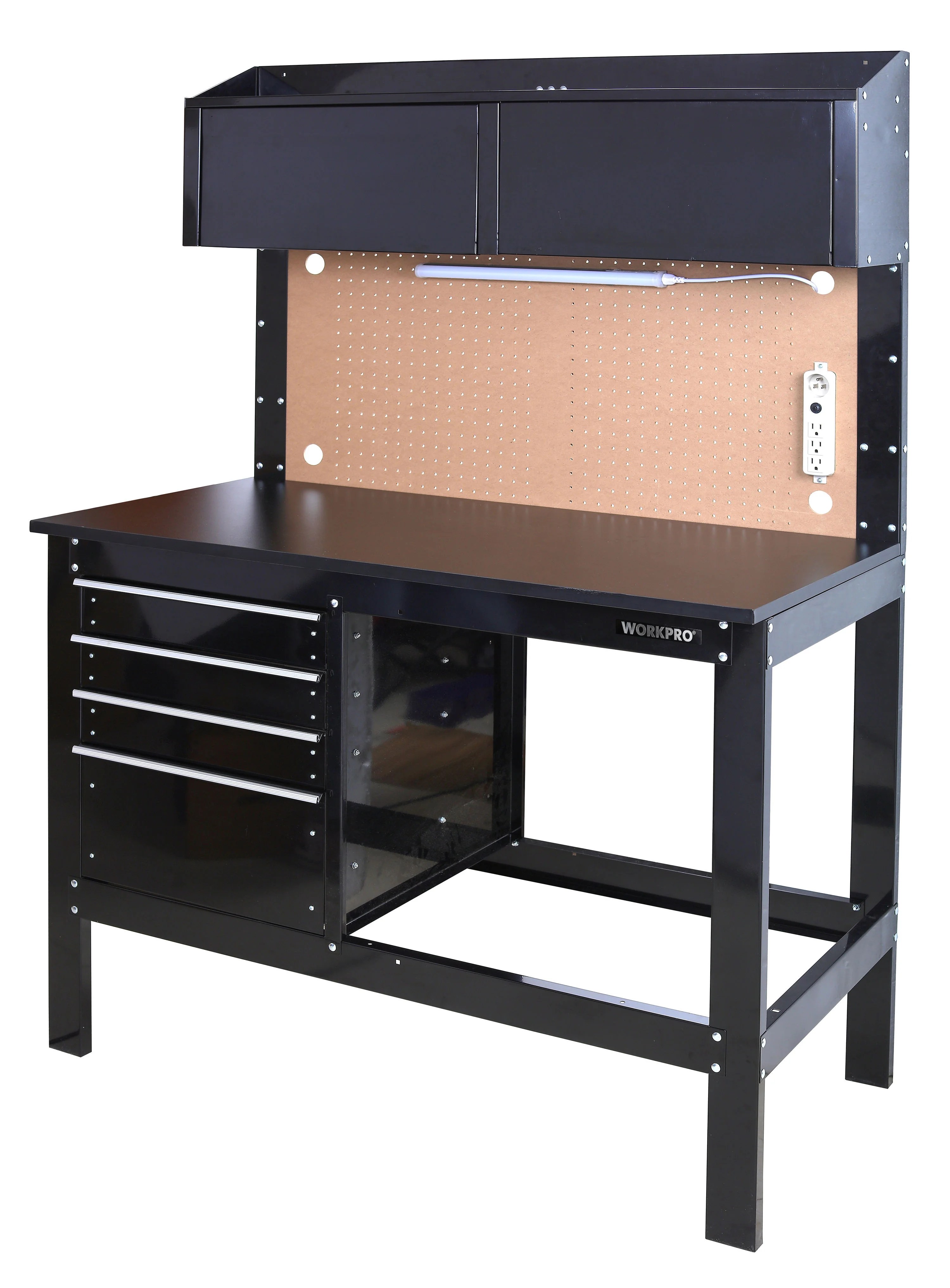
    Workpro 2-in-1 48in Workbench And Cabinet Combo With Work Light

    Workpro 2-in-1 48in workbench and cabinet combo with work light www.walmart.com

    Nice Workbench Ideas

    Nice workbench ideas fity.club
    Read More..

    Sabtu, 18 Oktober 2025

    84+ Diy Woodworking Plans For Beginners

    122 awesome diy pallet projects and ideas (furniture and garden) morningchores.com

    ```html
    Introduction: Building a Simple Wooden Birdhouse Building a birdhouse is a rewarding woodworking project, perfect for beginners. It's a great way to attract birds to your garden and learn basic woodworking skills. This guide will walk you through creating a simple yet functional birdhouse using common materials and tools.
    Materials You'll Need:
  • One 1x6 board (approximately 6 feet long) Cedar or pine are good choices.
  • Wood glue
  • 1 1/4" exterior screws or nails
  • Sandpaper (various grits, e.g., 80, 120, 220)
  • Exterior wood stain or paint (optional)
  • Eye hook (for hanging)
  • Tools You'll Need:
  • Saw (hand saw, circular saw, or miter saw)
  • Drill with drill bits (for pilot holes and entrance hole)
  • Screwdriver or nail gun
  • Measuring tape or ruler
  • Pencil
  • Clamps (optional, but helpful)
  • Step 1: Cutting the Wood Measure and cut the following pieces from your 1x6 board. These dimensions are approximate and can be adjusted slightly to suit your preferences. Always double-check your measurements before cutting.
  • Front: 6" wide x 8" tall
  • Back: 6" wide x 10" tall
  • Sides (2 pieces): 6" wide x 7" tall
  • Bottom: 6" wide x 6" deep
  • Roof (2 pieces): 6" wide x 9" long
  • Step 2: Drilling the Entrance Hole On the front piece, measure and mark the center of the entrance hole. A 2" diameter hole is suitable for many common birds. Drill the hole using a drill bit slightly larger than your desired entrance size (e.g., 2 1/8" spade bit). The placement of the hole (height from the bottom) will influence which birds are more likely to use the house. A higher hole is less appealing to sparrows, for example.
    Step 3: Assembling the Birdhouse Body Attach the sides to the bottom piece using wood glue and screws or nails. Ensure the pieces are aligned and square. The bottom piece should be flush with the bottom edges of the sides. Next, attach the front piece. Again, use wood glue and screws/nails, ensuring it's flush with the bottom and sides. Finally, attach the back piece. The back piece should extend 2" above the sides, creating a slight overhang for the roof.
    Step 4: Adding the Roof Attach the two roof pieces to the top of the birdhouse using wood glue and screws/nails. Overlap the roof pieces slightly at the peak to provide better weather protection. Make sure the roof pieces overhang the front and sides of the birdhouse equally.
    Step 5: Sanding and Finishing Sand all surfaces of the birdhouse to remove any rough edges and splinters. Start with coarser sandpaper (80 grit) and gradually work your way to finer grits (120, 220) for a smooth finish. If desired, apply an exterior wood stain or paint to protect the birdhouse from the elements. Be sure to use a bird-safe paint or stain, or allow the birdhouse to air out completely before installing it.
    Step 6: Adding the Hanging Hardware Drill a small pilot hole at the top center of the back piece. Screw in the eye hook for hanging the birdhouse.
    Step 7: Installing the Birdhouse Choose a suitable location for your birdhouse. Ideal locations are sheltered from strong winds and direct sunlight. Mount the birdhouse securely to a tree, post, or wall.
    Conclusion: Enjoy Your New Birdhouse! Congratulations on building your own birdhouse! With a little patience and effort, you've created a welcoming home for birds in your backyard. Remember to clean out the birdhouse annually after nesting season to prepare it for the next occupants. Enjoy watching the birds move in!
    ```

    Diy Living Room Decor Ideas

    Diy living room decor ideas ar.inspiredpencil.com

    122 Awesome Diy Pallet Projects And Ideas (furniture And Garden)

    122 awesome diy pallet projects and ideas (furniture and garden) morningchores.com

    30 Diy Storage Ideas For Your Art And Crafts Supplies

    30 diy storage ideas for your art and crafts supplies www.diys.com
    Read More..

    Jumat, 17 Oktober 2025

    36+ Easy Worship 6

    Staples easy button png, transparent png www.kindpng.com

    Opening: Preparing for DIY Worship Slides Creating your own worship slides can be a rewarding way to enhance your church's services and tailor them to your specific needs. This guide will walk you through the process, step-by-step, from gathering materials to presenting your final product. Whether you're a seasoned tech guru or a complete beginner, we'll cover the basics to help you make engaging and effective worship slides. This tutorial uses free and readily available software, making it accessible to most churches, regardless of budget.
    Step 1: Software and Material Gathering Before you begin, you'll need a few essential tools. The primary software you'll need is a presentation program. While Microsoft PowerPoint is a popular choice, consider using free alternatives like Google Slides or LibreOffice Impress. These options offer similar functionality without the expense.
  • A computer or laptop
  • A presentation software (Google Slides, PowerPoint, LibreOffice Impress, etc.)
  • Projector (to present the final output)
  • Scriptures, song lyrics and announcements to display
  • Background images or videos (royalty-free websites like Pexels, Unsplash, and Pixabay can be great sources for free media.)
  • A clear idea of your church's branding (colors, fonts, etc.)
  • Step 2: Setting Up Your Presentation Open your chosen presentation software and create a new, blank presentation. The first, and arguably most important step is to choose the correct aspect ratio. Most projectors use a 16:9 aspect ratio, which is widescreen. Set your slide size to 16:9 for optimal display. You can usually find this setting in the "Design" or "Page Setup" menu of your presentation software. Once you've set up the basic file, create a master slide or template. This will allow you to create a consistent look throughout your worship slides.
  • Open your presentation software.
  • Create a new, blank presentation.
  • Set the slide size to 16:9.
  • Create a master slide or template with your church's logo, colors, and any recurring elements.
  • Step 3: Adding Backgrounds and Text Now it's time to make your slides visually appealing. Begin by adding your chosen background image or video to the master slide. This will ensure that it appears on every slide you create. If using a video, ensure it loops smoothly and doesn't distract from the text. Once you have your background in place, add text boxes for your song lyrics, scriptures, and announcements. Choose a font that is easy to read from a distance and complements your church's branding. Consider using a contrasting color for the text so that it stands out against the background. Avoid using too much text on a single slide; break up longer passages into multiple slides for better readability.
  • Add your background image or video to the master slide.
  • Insert text boxes for lyrics, scriptures, and announcements.
  • Choose a readable font and contrasting text color.
  • Break up long passages into multiple slides.
  • Step 4: Animating and Transitioning Slides While not strictly necessary, subtle animations and transitions can add a touch of professionalism to your worship slides. Use animations sparingly to avoid distracting the congregation. Simple fade-in and fade-out effects are often the most effective. Choose transitions that are smooth and unobtrusive. Avoid flashy or overly complex transitions that can take away from the message. Google Slides often has simpler transitions built in, but PowerPoint and LibreOffice Impress may allow for more complex options.
  • Add subtle animations to text or images.
  • Use smooth and unobtrusive slide transitions.
  • Avoid overly complex or distracting animations and transitions.
  • Step 5: Proofreading and Testing Before using your worship slides in a service, it's crucial to proofread them carefully for any typos or errors. It's also a good idea to test your presentation on the projector you'll be using in church to ensure that the text is legible and the colors are accurate. Practice transitioning between slides smoothly so that you can lead the congregation effectively during worship. Get feedback from others to make sure it is readable and the colors work.
  • Proofread all text for typos and errors.
  • Test the presentation on the projector.
  • Practice transitioning between slides smoothly.
  • Get feedback from others before presenting.
  • Conclusion: Presenting Your Worship Slides Congratulations! You've successfully created your own DIY worship slides. Remember to continually refine your presentation style and content based on feedback and the needs of your congregation. By following these steps, you can create engaging and effective worship slides that enhance your church's services.

    25 Easy Main Dish Recipes For A Dinner Party: Easy Dinner Party Menu For 25

    25 easy main dish recipes for a dinner party: easy dinner party menu for 25 bestdinnerparty.blogspot.com

    Easy Gifs

    Easy gifs tenor.com

    Staples Easy Button Png, Transparent Png

    Staples easy button png, transparent png www.kindpng.com
    Read More..