Selasa, 30 September 2025

162+ Fine Woodworking Magazine Current Issue

Happy emoji with i am fine concept, flat sticker in.pinterest.com

Opening: Diving into DIY Magazine Storage Tired of piles of magazines cluttering your coffee table or bookshelf? Let's build a simple and stylish DIY magazine rack! This project is beginner-friendly and only requires a few basic tools and materials. This guide provides step-by-step instructions to create a functional and attractive storage solution for your favorite reads.
Step 1: Gathering Your Materials First, gather all of your needed materials.
  • Wood: Choose a wood that suits your style and budget. Pine is a good option for beginners. Consider the size of your magazines when deciding on the dimensions. A 1x12 board, approximately 4 feet long, should suffice. You can adjust dimensions as needed.
  • Screws: Wood screws that are appropriate for the thickness of your wood.
  • Wood Glue: Adds extra strength to joints.
  • Sandpaper: Different grits (e.g., 120, 220) for smoothing the wood.
  • Finish: Paint, stain, varnish, or polyurethane, depending on your desired look.
  • Step 2: Tools Needed Prepare the tools you will use.
  • Saw: A circular saw, hand saw, or jigsaw.
  • Drill: With drill bits for pilot holes and driving screws.
  • Measuring Tape: For accurate measurements.
  • Pencil: For marking cut lines.
  • Clamps: To hold pieces together while glue dries.
  • Sanding Block or Palm Sander: For smoothing surfaces.
  • Safety Glasses and Dust Mask: For protection.
  • Step 3: Cutting the Wood Cut the wood pieces according to your design. Here's a basic configuration:
  • Base: Cut one piece to your desired length (e.g., 16 inches).
  • Sides: Cut two pieces for the sides. These should be shorter than the base (e.g., 10 inches), creating the angled magazine holder. The height will determine how many magazines can be stored.
  • Front Support: Cut one piece for the front support. This piece should be the same width as the base (e.g., 16 inches) but much shorter in height (e.g., 3 inches). It keeps magazines from sliding out.
  • Step 4: Sanding the Pieces Sand all the cut pieces of wood. Start with a coarser grit sandpaper (e.g., 120) to remove any rough edges or imperfections, and then move to a finer grit (e.g., 220) for a smooth finish. Sanding before assembly is easier than sanding afterward.
    Step 5: Assembling the Magazine Rack Apply wood glue to the edges of the side pieces that will attach to the base. Position the side pieces on the base, ensuring they are evenly spaced and perpendicular to the base. Clamp the pieces together and allow the glue to dry completely (follow the glue manufacturer's instructions). Pre-drill pilot holes through the sides into the base. Then, drive screws through the sides into the base for added strength.
    Step 6: Adding the Front Support Apply wood glue to the bottom edge of the front support. Position the front support at the front edge of the base. Clamp it in place and let the glue dry. Pre-drill pilot holes and drive screws through the base into the front support.
    Step 7: Final Sanding and Finishing Once the glue is dry, sand the entire magazine rack again to smooth out any imperfections or glue residue. Choose your desired finish. You can paint, stain, varnish, or use polyurethane. Apply the finish according to the manufacturer's instructions, allowing it to dry completely between coats. Lightly sand between coats for an even smoother finish.
    Conclusion: Enjoy Your New Magazine Rack Congratulations! You've successfully built your own DIY magazine rack. Now you can proudly display your magazines in an organized and stylish way. Feel free to customize this project with different wood types, finishes, or embellishments to match your personal style. Enjoy!

    It's The End Of The World As The Democrats Know It: And No, They Aren't Feeling Fine (part I)

    It's the end of the world as the democrats know it: and no, they aren't feeling fine (part i) freerepublic.com

    Happy Emoji With I Am Fine Concept, Flat Sticker

    Happy emoji with i am fine concept, flat sticker in.pinterest.com

    Kyle Hume

    Kyle hume genius.com
    Read More..

    Sabtu, 27 September 2025

    81+ Workbench Plans Free

    Craftsman stationary work bench: 29-1/2" wide, 18" deep, 40-1/4" high, black red 23167927 msc atelier-yuwa.ciao.jp

    Introduction: Building Your Own Workbench A sturdy workbench is the cornerstone of any workshop. It provides a stable surface for countless projects, from simple repairs to complex builds. This step-by-step guide will walk you through building a robust and functional workbench that will serve you well for years to come. This plan focuses on a simple, strong design that's easy to customize to your specific needs.
    Planning and Materials Before you begin, consider the size and features you want in your workbench. A good starting size is around 6 feet long, 2 feet wide, and 3 feet high, but adjust these dimensions to fit your workspace and your height. Here's a basic material list, adjust quantities based on your desired size:
    • Lumber: 4x4 posts (for legs), 2x4s (for frame and stretchers), plywood or solid wood (for the top and optionally a shelf).
    • Fasteners: Wood screws (various lengths), wood glue.
    • Tools: Saw (circular saw, miter saw, or hand saw), drill, screw gun, measuring tape, level, square, safety glasses, work gloves, sanding block or sander.
    Step 1: Building the Frame Cut the 2x4s to create the frame for the workbench top. You'll need two long pieces for the front and back and two shorter pieces for the sides. Join the frame pieces together using wood glue and screws. Ensure the corners are square by using a square during assembly. This will create the foundation for a flat and sturdy work surface.
    Step 2: Attaching the Legs Cut the 4x4 posts to the desired height for the legs. Attach the legs to the inside corners of the frame, again using wood glue and screws. Make sure the legs are flush with the top edge of the frame. Use a level to ensure all legs are the same height and the frame is level. This ensures a stable base for the workbench.
    Step 3: Adding Stretchers Stretchers provide additional stability and prevent the legs from wobbling. Cut 2x4s to fit between the legs, creating a lower frame. Attach these stretchers to the legs using wood glue and screws, ensuring they are level and square. Consider adding stretchers at both the top and bottom of the legs for maximum rigidity.
    Step 4: Constructing the Workbench Top Cut the plywood or solid wood to the desired size for the workbench top. Attach the top to the frame using wood glue and screws. Ensure the top is flush with the frame and that all screws are countersunk to create a smooth surface. A solid, flat top is crucial for accurate work.
    Step 5: Adding a Shelf (Optional) If desired, add a shelf below the workbench for storage. Cut plywood or solid wood to the appropriate size for the shelf. Attach the shelf to the lower stretchers using wood glue and screws. This provides convenient storage for tools and materials.
    Step 6: Sanding and Finishing Sand the entire workbench to remove any rough edges or splinters. Apply a finish of your choice, such as varnish, polyurethane, or oil, to protect the wood and enhance its appearance. Allow the finish to dry completely before using the workbench.
    Conclusion: Enjoy Your New Workbench Congratulations! You've built your own workbench. This sturdy and functional workbench will be a valuable asset to your workshop for years to come. Remember to adjust the design and features to suit your specific needs and enjoy creating on your new workspace.

    Tennsco Adjustable Workbench — Wood Top, 60in.w X 30in.d, Medium Gray, Model# Wba-1-3060w

    Tennsco adjustable workbench — wood top, 60in.w x 30in.d, medium gray, model# wba-1-3060w www.northerntool.com

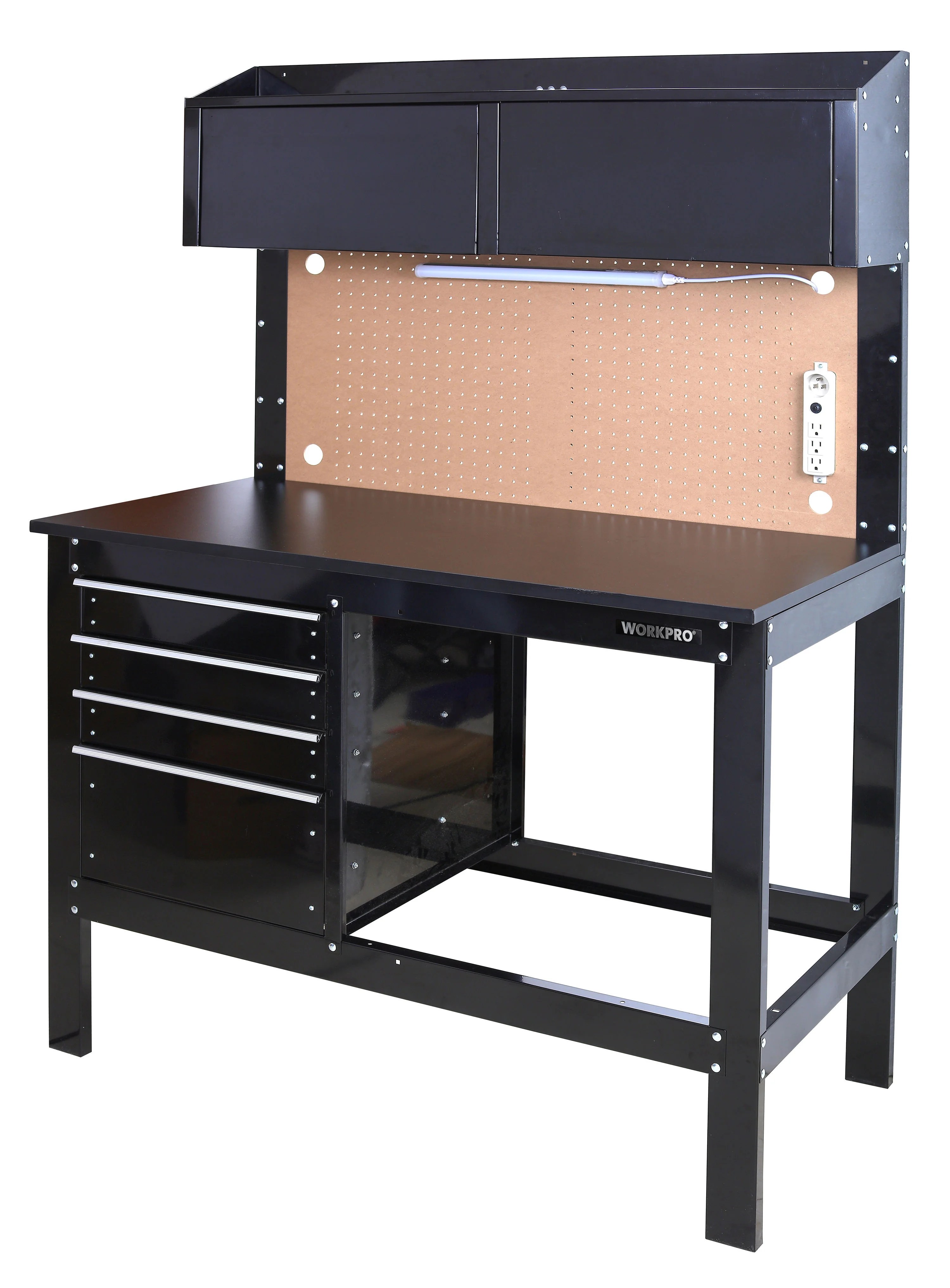
    Workpro 2-in-1 48-inch Workbench And Cabinet Combo With Light, Steel, Wood

    Workpro 2-in-1 48-inch workbench and cabinet combo with light, steel, wood www.pinterest.com

    Craftsman Stationary Work Bench: 29-1/2" Wide, 18" Deep, 40-1/4" High, Black Red 23167927 Msc

    Craftsman stationary work bench: 29-1/2" wide, 18" deep, 40-1/4" high, black red 23167927 msc atelier-yuwa.ciao.jp
    Read More..

    Kamis, 25 September 2025

    108+ Entryway Bench

    Charlton home bush creek solid wood storage entryway bench & reviews www.wayfair.com

    Introduction: Building Your Own Entryway Bench Welcome to a step-by-step guide on building a simple yet stylish entryway bench! This project is perfect for beginners and requires minimal tools and materials. A DIY entryway bench not only adds a functional seating area to your entrance but also provides a spot for storing shoes, bags, and other essentials, helping to keep your home organized and welcoming. Let's get started!
    Materials You'll Need Before you begin, gather all the necessary materials. This will save you time and frustration later on. Here's a list:
    • Wood (2x4s for the frame and legs, and a solid wood board or plywood for the top) Determine dimensions based on your desired bench size. A common size is 48 inches wide, 14 inches deep, and 18 inches high.
    • Wood screws (various sizes, including at least 2-inch and 3-inch screws)
    • Wood glue
    • Sandpaper (various grits: 80, 120, and 220)
    • Wood stain or paint (and appropriate applicators like brushes or rags)
    • Polyurethane or other sealant (optional, but recommended for durability)
    • Wood filler (for filling any holes or imperfections)
    Tools You'll Need Having the right tools will make the project much easier and safer. Here's a basic list:
    • Measuring tape
    • Pencil
    • Saw (circular saw, miter saw, or hand saw)
    • Drill with various drill bits
    • Screwdriver (or drill with screwdriver bits)
    • Sander (or sanding block)
    • Clamps (helpful for securing pieces while gluing and screwing)
    • Safety glasses
    • Ear protection
    Step 1: Cut the Wood Pieces Start by cutting all the wood pieces according to your desired dimensions. Here's a typical breakdown for a bench that is 48" wide, 14" deep, and 18" high:
    • Bench Top: One piece of solid wood or plywood measuring 48" x 14"
    • Frame (Long Sides): Two pieces of 2x4 lumber measuring 44" (48" 2 * 2", accounting for the width of the end frame pieces)
    • Frame (Short Sides): Two pieces of 2x4 lumber measuring 14"
    • Legs: Four pieces of 2x4 lumber measuring 16.5" (18" 1.5", accounting for the thickness of the top frame)
    Ensure all cuts are straight and accurate for a professional-looking finished product.
    Step 2: Assemble the Frame Construct the frame by attaching the long and short sides together using wood glue and screws.
    • Apply wood glue to the ends of the short side pieces.
    • Clamp the short sides to the long sides, ensuring they form a rectangle.
    • Drill pilot holes through the corners of the frame.
    • Insert screws into the pilot holes to secure the frame. Use at least two screws per corner.
    • Ensure the frame is square by measuring diagonally across the frame – the measurements should be equal. Adjust as needed before the glue dries.
    Step 3: Attach the Legs Now, attach the legs to the inside corners of the frame.
    • Apply wood glue to the top of each leg.
    • Position the legs inside the frame corners, ensuring they are flush with the top of the frame.
    • Clamp the legs to the frame.
    • Drill pilot holes through the frame into the legs.
    • Insert screws to secure the legs to the frame. Use at least two screws per leg.
    Step 4: Attach the Bench Top Place the frame assembly upside down onto the bench top.
    • Center the frame on the bench top, leaving an equal overhang on all sides (about 2 inches on the long sides).
    • Drill pilot holes through the frame and into the underside of the bench top.
    • Secure the frame to the bench top with screws. Be careful not to use screws that are too long, as they could poke through the top.
    Step 5: Sanding and Filling Once the bench is assembled, it's time to smooth out any rough edges and fill any holes.
    • Start with 80-grit sandpaper to remove any major imperfections or unevenness.
    • Then, move to 120-grit sandpaper to smooth the surface.
    • Finish with 220-grit sandpaper for a super smooth finish.
    • Fill any screw holes or imperfections with wood filler. Let the filler dry completely before sanding again with 220-grit sandpaper.
    • Pay special attention to the edges and corners, rounding them slightly for a more comfortable and polished look.
    Step 6: Staining or Painting After sanding, it's time to stain or paint the bench to your desired color.
    • If staining, apply the stain evenly with a brush or rag, following the manufacturer's instructions. Wipe off any excess stain after a few minutes. Let the stain dry completely.
    • If painting, apply a primer coat first to ensure good adhesion. Let the primer dry. Then, apply two or three coats of paint, allowing each coat to dry completely before applying the next.
    • Lightly sand between coats of paint with 220-grit sandpaper for an extra smooth finish.
    Step 7: Applying a Sealant (Optional) For added protection and durability, apply a sealant such as polyurethane.
    • Apply the sealant evenly with a brush or rag, following the manufacturer's instructions.
    • Let the sealant dry completely.
    • Apply a second coat if desired, lightly sanding between coats with 220-grit sandpaper.
    Conclusion: Enjoy Your New Entryway Bench! Congratulations! You've successfully built your own entryway bench. Place it in your entryway and enjoy the added seating and storage space. Feel free to customize the design and dimensions to fit your specific needs and style. With a little effort and some basic materials, you've created a functional and stylish piece of furniture for your home!

    Safavieh Erica Wood Storage Entryway Bench & Reviews

    Safavieh erica wood storage entryway bench & reviews www.wayfair.com

    Charlton Home Bush Creek Solid Wood Storage Entryway Bench & Reviews

    Charlton home bush creek solid wood storage entryway bench & reviews www.wayfair.com

    Breakwater Bay Lady Lake Storage Entryway Bench & Reviews

    Breakwater bay lady lake storage entryway bench & reviews www.wayfair.com
    Read More..

    Rabu, 24 September 2025

    83+ Decorative Wooden Boxes

    Cubist laser cut wood decorative box www.pinterest.com

    ```html
    Opening: A World of Wooden Boxes Want to add a touch of rustic charm and practical storage to your home? Building your own decorative wooden box is a fantastic DIY project. It's customizable to your exact needs and aesthetic, plus it's a satisfying way to use your hands. This step-by-step guide will walk you through the process, from gathering materials to adding the finishing touches. Let's get started!
    Step 1: Planning and Design Before you even touch a piece of wood, decide on the size and style of your box. Consider what you'll be using it for. Jewelry? Keepsakes? Tools? Sketch out your design, noting the dimensions of each side, the bottom, and the lid (if you're including one). This will help you calculate how much wood you need.
    Step 2: Gathering Your Materials
  • Wood: Choose your wood wisely. Pine is affordable and easy to work with, but hardwoods like oak or walnut offer a more refined look. Consider reclaimed wood for a rustic feel.
  • Tools: You'll need a saw (hand saw, jigsaw, or circular saw), measuring tape, pencil, sandpaper (various grits), wood glue, clamps, nails or screws, a drill (if using screws), and safety glasses. A miter saw and miter box are incredibly useful for precise angled cuts.
  • Finishing Supplies: This includes stain, paint, varnish, or sealant, depending on your desired finish. You might also want hinges, latches, decorative hardware, or lining materials.
  • Step 3: Cutting the Wood Carefully measure and mark your wood pieces according to your design. Double-check your measurements before cutting! Use your saw to cut each piece precisely. If using a miter saw, set the appropriate angle for corner joints if you're opting for angled edges. Ensure all cuts are clean and straight for a professional-looking result.
    Step 4: Assembling the Box Apply wood glue to the edges of the pieces that will form the sides of the box. Clamp the pieces together tightly, ensuring the corners are square. Use nails or screws to reinforce the joints while the glue dries. Remove any excess glue with a damp cloth. Let the glue dry completely (usually several hours or overnight) before proceeding.
    Step 5: Creating the Bottom Cut a piece of wood to fit snugly inside the bottom of the box. Apply wood glue to the bottom edges of the assembled sides. Insert the bottom piece and clamp it in place. Reinforce with nails or screws if desired. Again, allow the glue to dry completely.
    Step 6: Crafting the Lid (Optional) If your design includes a lid, repeat steps 3-5 to create a separate, slightly larger box that will serve as the lid. Ensure the lid fits properly over the base of the box.
    Step 7: Sanding and Finishing Once the glue is completely dry, sand the entire box (inside and out) to smooth out any rough edges or imperfections. Start with a coarser grit sandpaper and gradually move to finer grits. Wipe away any sanding dust with a clean cloth.
    Step 8: Applying the Finish Choose your desired finish. Stain will highlight the wood grain, while paint offers more color options. Varnish or sealant will protect the wood and add a glossy or matte finish. Apply the finish according to the manufacturer's instructions. You may need multiple coats for optimal coverage and protection. Allow each coat to dry completely before applying the next.
    Step 9: Adding Hardware and Embellishments If you're adding hinges and a latch, install them now, following the manufacturer's instructions. Attach any decorative hardware, such as handles or knobs. Consider adding lining to the inside of the box with fabric, felt, or other materials to protect delicate items.
    Conclusion: Your DIY Wooden Box is Complete! Congratulations! You've successfully built your own decorative wooden box. Admire your handiwork and enjoy the satisfaction of creating something beautiful and functional. Experiment with different woods, finishes, and embellishments to create a variety of boxes for different purposes. This project is a gateway to more advanced woodworking endeavors!
    ```

    Decorative Wooden Boxes

    Decorative wooden boxes www.etsy.com

    Cubist Laser Cut Wood Decorative Box

    Cubist laser cut wood decorative box www.pinterest.com

    Decorative Wooden Boxes

    Decorative wooden boxes www.countryshoponline.com
    Read More..

    Selasa, 23 September 2025

    95+ Easyworship Build 2

    Easyworship (build 11) download easyworship-build-11.software.informer.com

    Opening: Unleash Your Creativity: Building a DIY EasyWorship Build
    Ready to enhance your worship experience without breaking the bank? This guide will walk you through building your very own DIY EasyWorship build, maximizing performance and minimizing costs. We'll break down each step, from hardware selection to software optimization, ensuring a smooth and powerful presentation system. Let's get started!
    Step 1: Hardware Selection
    The foundation of your build is the hardware. Choosing the right components is crucial for performance and reliability. Here's a breakdown of the key elements:
    • CPU (Central Processing Unit): Aim for at least an Intel Core i5 or AMD Ryzen 5 processor for smooth playback of videos and complex presentations. Newer generations offer better performance.
    • RAM (Random Access Memory): 16GB of RAM is highly recommended. EasyWorship can be memory-intensive, especially with multiple layers and video backgrounds.
    • GPU (Graphics Processing Unit): A dedicated graphics card, even an entry-level one (e.g., NVIDIA GeForce GT 1030 or AMD Radeon RX 550), will significantly improve video playback and overall system responsiveness. Integrated graphics can work, but a dedicated card is preferred.
    • Storage: A fast SSD (Solid State Drive) is essential for the operating system and EasyWorship installation. This will drastically reduce boot times and improve application loading speeds. A 256GB SSD should suffice, but a 500GB or 1TB SSD will give you more room for media files. Consider a secondary HDD (Hard Disk Drive) for storing large media libraries.
    • Power Supply: Choose a reliable power supply unit (PSU) with sufficient wattage to handle all the components. A 450W or 500W PSU from a reputable brand should be adequate.
    • Case: Select a case that can accommodate all your components and provide adequate cooling.
    • Video Output: Ensure your graphics card has the necessary outputs (HDMI, DVI, VGA) to connect to your projector(s) or display screens.
    Step 2: Assembling the PC
    If you're not familiar with PC building, consider watching some tutorials on YouTube. Building a PC is not as complicated as it seems, but it does require careful attention to detail.
    • Install the CPU: Carefully align the CPU with the socket on the motherboard and gently press it into place.
    • Install the CPU Cooler: Apply thermal paste to the CPU and install the CPU cooler.
    • Install RAM: Insert the RAM modules into the appropriate slots on the motherboard.
    • Mount the Motherboard: Secure the motherboard inside the case.
    • Install the Graphics Card: Insert the graphics card into the PCIe slot.
    • Install Storage Drives: Mount the SSD and HDD in the case and connect them to the motherboard.
    • Connect the Power Supply: Connect the power supply to the motherboard and all the other components.
    • Cable Management: Neatly organize the cables to improve airflow and aesthetics.
    Step 3: Operating System Installation
    Once the hardware is assembled, it's time to install the operating system.
    • Download Windows 10 or Windows 11: You'll need a legitimate copy of Windows and a bootable USB drive.
    • Boot from USB: Configure your BIOS to boot from the USB drive.
    • Follow the Installation Prompts: Follow the on-screen instructions to install Windows.
    • Install Drivers: After the installation is complete, install the necessary drivers for your motherboard, graphics card, and other components. You can usually download these from the manufacturers' websites.
    Step 4: EasyWorship Installation and Configuration
    Now, it's time to install EasyWorship and configure it for optimal performance.
    • Download and Install EasyWorship: Download the latest version of EasyWorship from their official website and follow the installation instructions.
    • Activate Your License: Activate your EasyWorship license.
    • Configure Display Settings: Configure the display settings in EasyWorship to match your projector or screen setup. Ensure the correct resolution and display outputs are selected.
    • Import Media: Import your songs, videos, and images into EasyWorship.
    • Optimize Performance: In EasyWorship's settings, adjust caching and other performance options to optimize playback.
    Step 5: Testing and Optimization
    After installation and configuration, thoroughly test your build to ensure everything is working correctly.
    • Test Song Projection: Project different songs with various backgrounds and lyrics to check for any issues.
    • Test Video Playback: Playback different video formats to ensure smooth playback.
    • Monitor Performance: Use a performance monitoring tool (e.g., Task Manager) to check CPU and GPU usage during playback. Adjust settings as needed to optimize performance.
    • Update Drivers Regularly: Keep your graphics card drivers updated to ensure optimal performance and compatibility.
    Conclusion: Enjoy Your DIY EasyWorship Build
    Congratulations! You've successfully built your own DIY EasyWorship build. By carefully selecting the right components and optimizing the software, you've created a powerful and cost-effective presentation system for your worship services. Enjoy! Remember to regularly maintain your system by cleaning it and keeping your drivers updated for continued optimal performance.

    Easyworship 7 Build 7.4.0.7

    Easyworship 7 build 7.4.0.7 sanet.st

    Easyworship 7 Build 7.4.1.9 Update 2023

    Easyworship 7 build 7.4.1.9 update 2023 www.lazada.co.id

    Easyworship (build 11) Download

    Easyworship (build 11) download easyworship-build-11.software.informer.com
    Read More..

    Senin, 22 September 2025

    58+ Woodworking Plans For Children's Toys

    Woodworking wallpapers wallpaperaccess.com

    ```html
    Introduction: DIY Toy Car Construction

    Looking for a fun and engaging woodworking project? Building a wooden toy car is a rewarding experience that can be enjoyed by adults and children alike. This guide provides a step-by-step approach to creating a simple yet charming wooden toy car from scratch. Let's get started!

    Materials and Tools You'll Need

    Before you begin, gather the following materials and tools:

    • Wood: Select a softwood like pine or basswood for easy shaping and cutting. Aim for a thickness of around 1 inch.
    • Wheels: Pre-made wooden wheels are readily available in various sizes. Choose a size appropriate for your car design.
    • Axles: Dowel rods (1/4 inch diameter) work well as axles.
    • Wood Glue: A strong wood glue is essential for secure joints.
    • Sandpaper: Different grits (80, 120, 220) for smoothing surfaces.
    • Saw: A coping saw, jigsaw, or bandsaw for cutting the car body.
    • Drill: With drill bits sized for the axles.
    • Clamps: To hold pieces together while the glue dries.
    • Pencil and Ruler: For marking and measuring.
    • Finishing (Optional): Paint, varnish, or wood stain.
    Step 1: Design and Planning

    Sketch out your desired car design on paper. Consider the size, shape, and overall aesthetic. Decide on the dimensions of the car body, ensuring it's large enough to accommodate the wheels and axles comfortably. Transfer your design onto the chosen piece of wood using a pencil and ruler. Accurate measurements are crucial for a well-proportioned car.

    Step 2: Cutting the Car Body

    Carefully cut out the car body shape from the wood using your chosen saw. A coping saw is excellent for intricate curves, while a jigsaw or bandsaw can handle straighter cuts more efficiently. Follow the lines you drew in Step 1 as accurately as possible. Take your time and prioritize safety, using clamps to secure the wood if needed.

    Step 3: Sanding and Shaping

    Once the car body is cut, use sandpaper to smooth out any rough edges and refine the shape. Start with a coarser grit (80) to remove significant imperfections, then move to finer grits (120 and 220) for a smooth finish. Round the edges for a more comfortable and aesthetically pleasing feel. Consider using a sanding block to maintain even pressure and prevent uneven sanding.

    Step 4: Drilling Axle Holes

    Determine the location for the axle holes. They should be positioned centrally on the underside of the car body, close to the front and rear. Use a drill bit that matches the diameter of your chosen axles (dowel rods). Drill the axle holes straight and clean, ensuring they are deep enough to accommodate the axles without protruding too far.

    Step 5: Attaching the Wheels

    Apply a small amount of wood glue to the axles. Insert the axles through the drilled holes in the car body. Attach the wheels to the ends of the axles, ensuring they are securely glued in place. Use clamps to hold the wheels in position while the glue dries completely, following the glue manufacturer's instructions. Make sure the wheels can spin freely without excessive friction.

    Step 6: Finishing (Optional)

    Once the glue has dried, you can apply a finish to your toy car. Paint it with non-toxic paints in your desired colors. Alternatively, you can use a wood stain to enhance the natural wood grain. Varnish or polyurethane can be applied to protect the finish and add a glossy sheen. Ensure the finish is fully dry before allowing children to play with the car.

    Conclusion: Enjoy Your Creation
    You Might Also Like: 89 Boat Building Plans Australia

    Congratulations! You have successfully built your own wooden toy car. This project is not only a fun and engaging craft activity but also a wonderful way to create a personalized toy that can be cherished for years to come. Experiment with different designs, sizes, and finishes to create a whole fleet of unique wooden cars!

    ```

    Woodworking Wallpapers

    Woodworking wallpapers wallpaperaccess.com

    Woodworking

    Woodworking 4hab.com

    24 Must-have Woodworking Tools For Your Workshop

    24 must-have woodworking tools for your workshop www.grainger.com
    Read More..

    Minggu, 21 September 2025

    127+ Free Woodworking Plans For Beginners Free Download

    Assistance free assistance.free.fr

    Opening: Unleash Your Inner Woodworker: Building a Simple Wooden Birdhouse
    Ready to attract some feathered friends to your backyard? Building a birdhouse is a fantastic beginner woodworking project. It's relatively quick, inexpensive, and yields a rewarding result. This step-by-step guide will walk you through constructing a basic but charming wooden birdhouse.
    Step 1: Gather Your Materials and Tools
    Before you start, make sure you have everything you need. This will prevent frustrating interruptions mid-project. Here's a comprehensive list:
  • Wood: Pine, cedar, or redwood are good choices (approximately 1 board foot). Aim for a thickness of about ¾ inch.
  • Saw: A handsaw, jigsaw, circular saw, or miter saw will work.
  • Drill: With drill bits for pilot holes and the entrance hole.
  • Screws or Nails: Exterior-grade screws (1 ¼ inch) are preferable for durability.
  • Measuring Tape or Ruler
  • Pencil
  • Sandpaper: Medium-grit and fine-grit.
  • Wood Glue (optional, but recommended for added strength)
  • Clamps (optional, but helpful)
  • Safety Glasses and Dust Mask
  • Step 2: Cut the Wood Pieces
    Follow these dimensions for a standard birdhouse. Feel free to adjust them slightly to suit your preferences, but maintain the ratios for a functional design.
  • Front: 6 inches wide x 8 inches high
  • Back: 6 inches wide x 10 inches high (The extra 2 inches will form the roof overhang)
  • Sides (2 pieces): 6 inches wide x 7 inches high, angled at the top to meet the roof (see diagram below)
  • Bottom: 6 inches wide x 6 inches deep
  • Roof (2 pieces): 5 inches wide x 8 inches long
  • After cutting, sand all the edges smooth to prevent splinters. The sides will require a angled cut. The easiest way to make a angled cut is to measure from the front top edge of the piece to the back top edge a difference of 2 inch then cut that angle.
    Step 3: Assemble the Birdhouse Body
    Begin by attaching the sides to the bottom piece. Apply wood glue to the edges of the bottom piece and clamp the sides in place. Then, drill pilot holes and secure them with screws or nails. Next, attach the front piece, again using glue, pilot holes, and screws/nails. Finally, attach the back piece in the same manner, ensuring the extra 2 inches of the back piece extend beyond the top edge of the front and side pieces to create the roof overhang.
    Step 4: Create the Entrance Hole
    Choose a suitable location for the entrance hole on the front piece. A good rule of thumb is to place it about 2 inches below the top edge. The size of the hole will determine which species of birds you attract. A 1 ½ inch diameter hole is suitable for wrens, chickadees, and titmice. Drill the hole carefully using a drill bit of the appropriate size. Sand the edges of the hole smooth to prevent injury to the birds.
    Step 5: Attach the Roof
    Apply wood glue to the top edges of the front, back, and side pieces. Position the two roof pieces on top, ensuring they overhang slightly on all sides. Clamp the roof pieces in place and secure them with screws or nails. Ensure the roof pieces are flush to create a waterproof top to the birdhouse.
    Step 6: Sanding and Finishing
    Once the birdhouse is fully assembled, sand all the surfaces smooth, starting with medium-grit sandpaper and finishing with fine-grit sandpaper. This will remove any rough edges and prepare the surface for finishing. While painting the inside is not recommended, you can apply an exterior-grade paint or stain to the outside of the birdhouse to protect it from the elements. Choose a light color, as dark colors can overheat the birdhouse in direct sunlight. Let the finish dry completely before mounting the birdhouse.
    Step 7: Mounting the Birdhouse
    Consider these tips when choosing a location for your birdhouse:
  • Height: Mount the birdhouse at a height appropriate for the species you hope to attract.
  • Sunlight: Avoid direct sunlight to prevent overheating.
  • Predators: Choose a location that is relatively safe from predators like cats.
  • Accessibility: Make sure the birdhouse is accessible for cleaning.
  • To mount the birdhouse, you can drill holes through the back piece and attach it to a tree, post, or wall using screws. Alternatively, you can use a commercially available birdhouse mounting bracket.
    Conclusion: Enjoy Your New Birdhouse!
    Congratulations! You've successfully built a simple wooden birdhouse. Now, patiently wait and observe as local birds discover and move into their new home. Remember to clean the birdhouse out once a year (usually in late summer or early fall) to remove old nesting material and keep it a healthy environment for future residents. Building this birdhouse is not only a fun project but also a small contribution to supporting local wildlife.

    Free Png Transparent Image Download, Size: 600x600px

    Free png transparent image download, size: 600x600px pngimg.com

    Assistance Free

    Assistance free assistance.free.fr

    Free Png Transparent Image Download, Size: 828x820px

    Free png transparent image download, size: 828x820px pngimg.com
    Read More..

    Sabtu, 20 September 2025

    142+ Hanging Plant Wall Shelf With Storage And Hooks

    Plant shelf, wall shelf, floating shelf, cat proof shelf, plant stand, small shelf, hanging www.michaels.com

    ```html
    Introduction: Bringing the Outdoors In
    Ready to add a touch of greenery and rustic charm to your home? This DIY hanging plant wall shelf with storage and hooks is the perfect project! Not only does it provide a stylish display for your plants, but it also offers convenient storage and hanging space for smaller items. Let's get started!
    Materials and Tools You'll Need:
    Before diving in, gather these essential supplies:
  • Wooden planks (various sizes depending on your desired shelf dimensions)
  • Wood screws
  • Wood glue
  • Sandpaper (various grits)
  • Wood stain or paint (optional)
  • Measuring tape
  • Pencil
  • Drill with various drill bits
  • Saw (hand saw or power saw)
  • Level
  • Hanging hardware (heavy-duty hooks, chain, or rope)
  • Metal hooks (for hanging items)
  • Wood finish/sealant (optional)
  • Step 1: Planning and Cutting the Wood
    First, decide on the size and layout of your plant shelf. Consider the amount of space you have available and the number of plants you want to display. Sketch out a design and calculate the dimensions of each wooden piece. Then, using your saw, carefully cut the wooden planks according to your measurements. Remember to measure twice and cut once!
    Step 2: Sanding and Smoothing
    Once the wood is cut, it's time to sand down any rough edges or splinters. Start with a coarser grit sandpaper and gradually move to finer grits for a smooth finish. Pay close attention to the edges and corners. This step is crucial for a professional-looking final product and to prevent any scratches or injuries.
    Step 3: Assembling the Shelf Structure
    Now, begin assembling the main structure of your shelf. Apply wood glue to the edges of the planks that will be joined together and secure them with wood screws. Use a drill to create pilot holes before inserting the screws to prevent the wood from splitting. Make sure the corners are square and the structure is stable. If you're adding storage compartments, construct them using the same gluing and screwing technique.
    Step 4: Adding the Hanging Hardware
    Carefully measure and mark the points where you want to attach the hanging hardware (hooks, chain, or rope). Pre-drill pilot holes and securely fasten the hardware to the top of the shelf. Ensure that the hardware is strong enough to support the weight of the shelf and the plants you'll be placing on it. Distribute the weight evenly to avoid any strain on the hanging hardware.
    Step 5: Staining or Painting (Optional)
    If you want to add color or enhance the natural wood grain, now is the time to stain or paint your shelf. Choose a stain or paint that complements your home decor. Apply the stain or paint evenly in thin coats, allowing each coat to dry completely before applying the next. Consider applying a wood finish or sealant for extra protection and durability.
    Step 6: Attaching the Metal Hooks
    Decide where you want to place the metal hooks for hanging items. These are great for holding small gardening tools, watering cans, or decorative items. Drill pilot holes and screw the hooks securely into the wood. Ensure they are spaced evenly and can hold the weight of the items you intend to hang.
    Step 7: Final Touches and Hanging
    Before hanging, double-check all the screws and hardware to ensure everything is securely fastened. Use a level to ensure the shelf hangs straight. Carefully hang the shelf on the wall using appropriate wall anchors that are designed to support the weight.
    Step 8: Decorating and Enjoying
    Now comes the fun part! Arrange your plants on the shelf and hang your chosen items from the metal hooks. Step back and admire your handiwork. You've created a beautiful and functional hanging plant wall shelf that adds a touch of nature to your home.
    Conclusion: A Verdant Addition to Your Home
    Congratulations on completing your DIY hanging plant wall shelf! This project not only enhances your home decor but also provides a unique way to display your plants and organize your space. Enjoy the beauty and tranquility it brings to your home. Remember to water your plants regularly and adjust their position to ensure they receive adequate sunlight.
    ```

    Plant Shelf, Wall Shelf, Floating Shelf, Cat Proof Shelf, Plant Stand, Small Shelf, Hanging

    Plant shelf, wall shelf, floating shelf, cat proof shelf, plant stand, small shelf, hanging www.michaels.com

    Hanging Plant Shelves // Wall Shelves Shelf Wall Unit //

    Hanging plant shelves // wall shelves shelf wall unit // www.pinterest.com

    Hanging Plant Shelf

    Hanging plant shelf artfulroost.com
    Read More..

    Jumat, 19 September 2025

    95+ Workbench With Built-In Tool Storage

    Craftsman stationary work bench: 29-1/2" wide, 18" deep, 40-1/4" high, black red 23167927 msc atelier-yuwa.ciao.jp

    Opening: The Ultimate DIY Workbench Building a sturdy and functional workbench is a cornerstone for any serious DIY enthusiast. This guide will walk you through creating a 95+ inch workbench equipped with integrated tool storage, maximizing both your workspace and organization. Get ready to elevate your workshop game!
    Step 1: Planning and Materials Before you start cutting wood, careful planning is crucial. Decide on the dimensions of your workbench, considering your available space and project needs. For a 95+ inch bench, you'll need to adjust material quantities accordingly.
  • Materials List:
  • 4x4 lumber for legs
  • 2x4 lumber for frame and stretchers
  • 3/4" plywood for the workbench top and shelves
  • 1/4" plywood for drawer bottoms (optional)
  • Wood screws (various sizes)
  • Wood glue
  • Drawer slides (optional)
  • Hardware for drawers (knobs or pulls optional)
  • Sandpaper (various grits)
  • Wood finish (paint, stain, or polyurethane)
  • Safety glasses, ear protection
  • Measuring tape, pencil
  • Circular saw or table saw
  • Drill/Driver
  • Clamps
  • Square
  • Step 2: Building the Workbench Frame The frame provides the structural integrity of your workbench. Accurate cuts and solid joinery are essential.
  • Cut the 4x4 lumber into four equal lengths for the legs.
  • Cut the 2x4 lumber for the top frame (two long pieces and two short pieces). The long pieces should be slightly longer than the desired width of your final workbench length to account for the legs.
  • Cut the 2x4 lumber for the lower frame (two long pieces and two short pieces). These will support the lower shelves and provide stability.
  • Cut 2x4 lumber for the leg stretchers to add stability to the bottom of the bench.
  • Assemble the top frame by joining the 2x4s with screws and wood glue, ensuring it's square.
  • Attach the legs to the inside corners of the top frame using screws and wood glue.
  • Assemble the lower frame in the same manner as the top frame.
  • Attach the lower frame to the legs, ensuring consistent distance from the bottom of the legs. Again, use screws and wood glue.
  • Attach the leg stretchers between the legs at ground level.
  • Step 3: Creating the Workbench Top The workbench top needs to be strong and flat. Plywood provides a good balance of affordability and durability.
  • Cut the 3/4" plywood to the desired dimensions of your workbench top. Remember to slightly overhang the frame.
  • Apply wood glue to the top of the frame and carefully position the plywood top on the frame.
  • Secure the plywood top to the frame with screws from underneath, ensuring they don't protrude through the top surface.
  • For added durability, you can apply multiple layers of plywood, gluing and screwing each layer to the previous one.
  • Step 4: Adding Shelving and Tool Storage Now it's time to customize your workbench with shelves and drawers.
  • Cut the 3/4" plywood for the shelves to the desired size, accounting for the space within the lower frame.
  • Slide the shelves into the lower frame and secure them with screws from the sides.
  • For drawers (optional): Measure the space for the drawers within the workbench.
  • Cut the 3/4" plywood for the drawer sides, front, and back.
  • Cut the 1/4" plywood for the drawer bottoms.
  • Assemble the drawers using screws and wood glue.
  • Attach the drawer slides to the inside of the workbench frame and to the drawer sides.
  • Install the drawers into the workbench.
  • Step 5: Sanding and Finishing A smooth surface is essential for comfortable and safe work. Finishing protects the wood and enhances its appearance.
  • Sand all surfaces of the workbench, starting with a coarser grit sandpaper (e.g., 80-grit) and gradually moving to finer grits (e.g., 120-grit, 220-grit).
  • Remove all sanding dust with a tack cloth or vacuum.
  • Apply your chosen wood finish according to the manufacturer's instructions. This could be paint, stain, or polyurethane. Multiple coats are often recommended for durability.
  • Allow the finish to dry completely between coats.
  • Conclusion: Enjoy Your New Workbench Congratulations! You've built a robust and functional 95+ inch workbench with built-in tool storage. This workbench will be a valuable asset in your workshop for years to come. Customize it further with additional features as needed to suit your specific project needs.

    Craftsman Stationary Work Bench: 29-1/2" Wide, 18" Deep, 40-1/4" High, Black Red 23167927 Msc

    Craftsman stationary work bench: 29-1/2" wide, 18" deep, 40-1/4" high, black red 23167927 msc atelier-yuwa.ciao.jp

    Workpro 2-in-1 48in Workbench And Cabinet Combo With Work Light

    Workpro 2-in-1 48in workbench and cabinet combo with work light www.walmart.com

    Tennsco

    Tennsco www.tennsco.com
    Read More..

    Kamis, 18 September 2025

    76+ Workbench With Built-In Lighting

    Husky 4 ft. solid wood top workbench with storage-g4801s-us www.homedepot.com

    ```html
    Introduction: Brighten Your Workspace with a DIY Workbench
    Are you tired of working in a dimly lit space? This guide will walk you through building a sturdy 76-inch workbench with integrated lighting, perfect for tackling any project. This workbench offers ample workspace and eliminates the need for separate task lighting, improving visibility and efficiency. Let's get started!
    Materials and Tools You'll Need
    Before you begin, gather the following materials and tools. Adjust dimensions as needed to suit your space, but this guide assumes a 76-inch width.
    • Lumber:
      • 4x4 posts (4) for legs
      • 2x4 lumber for the frame (enough for the perimeter and internal supports)
      • Plywood or MDF for the workbench top (76" x desired depth, typically 24-30")
      • Additional 2x4s for mounting lights (length depends on light fixture size)
    • Lighting:
      • LED strip lights or shop lights (length depends on workbench length)
      • Power cord and switch
    • Hardware:
      • Wood screws (various sizes)
      • Bolts, nuts, and washers for attaching legs (optional, for extra strength)
      • Wire connectors (for electrical wiring)
      • Staples or tacks (for securing wires)
    • Tools:
      • Saw (circular saw, miter saw, or hand saw)
      • Drill with drill bits
      • Screwdriver or impact driver
      • Measuring tape
      • Level
      • Wire stripper
      • Safety glasses
      • Pencil
      • Clamps
    Step 1: Build the Workbench Frame
    Cut the 2x4 lumber to create the frame. You'll need four pieces for the perimeter (two at 76 inches and two at your chosen depth). Use wood screws to assemble the rectangular frame. Ensure the corners are square. For added stability, add internal supports every 16-24 inches. These should run perpendicular to the length of the workbench, connecting the two longer sides of the frame. Screw them securely into place.
    Step 2: Attach the Legs
    Attach the 4x4 legs to the inside corners of the frame. Use wood screws to secure them. For extra strength, you can also use bolts, nuts, and washers. Ensure the legs are plumb (perfectly vertical) using a level. Clamping the legs in place while you screw them will help ensure a secure and square attachment.
    Step 3: Install the Workbench Top
    Place the plywood or MDF workbench top onto the frame. Center it and secure it to the frame using wood screws. Drive the screws from the underside of the frame up into the workbench top. Use plenty of screws to prevent the top from shifting or warping.
    Step 4: Build the Lighting Support
    Cut the additional 2x4s to create a support structure for the lights. This structure will typically sit above the workbench top and span the length of the workbench. The design can vary depending on the type of lights you are using. For LED strip lights, a simple frame above the workbench top will suffice. For shop lights, you might need to create a more robust structure. Secure this lighting support structure to the workbench frame using wood screws. Ensure it is sturdy and can support the weight of the lights.
    Step 5: Install the Lights
    Mount the LED strip lights or shop lights to the lighting support structure. If using LED strip lights, they usually have an adhesive backing. Carefully peel off the backing and stick them to the support. If using shop lights, use screws or clips to secure them in place.
    Step 6: Wire the Lights
    Wire the lights according to the manufacturer's instructions. Connect the power cord to the lights using wire connectors. Be sure to include a switch in the circuit to easily turn the lights on and off. Secure all wires with staples or tacks to prevent them from dangling. If you are uncomfortable with electrical wiring, consult a qualified electrician. Important Safety Note: Disconnect power before working on any electrical connections.
    Step 7: Finishing Touches
    Inspect the workbench for any sharp edges or splinters. Sand them down if necessary. You can also apply a finish to the workbench top to protect it from spills and scratches. Options include polyurethane, varnish, or paint. Let the finish dry completely before using the workbench.
    Conclusion: Enjoy Your Illuminated Workspace!
    Congratulations! You've successfully built a sturdy and well-lit workbench. This new workspace will provide you with ample room and excellent lighting for all your projects. Enjoy creating!
    ```

    Woodplank: Diy Workbench

    Woodplank: diy workbench thewoodplankers.blogspot.com

    Husky 4 Ft. Solid Wood Top Workbench With Storage-g4801s-us

    Husky 4 ft. solid wood top workbench with storage-g4801s-us www.homedepot.com

    European Cabinet Makers Workbench

    European cabinet makers workbench www.isobevel.com
    Read More..

    Rabu, 17 September 2025

    74+ Wooden Entryway Shelf With Hooks

    Diverse wooden surface. the walls of the houses are made of wood. boards for background and www.vecteezy.com

    ```html
    Opening: Upgrade Your Entryway with a DIY Shelf & Hooks!
    Tired of clutter near your front door? Want a stylish and functional way to organize coats, bags, and keys? This step-by-step guide will walk you through building a beautiful and practical wooden entryway shelf with hooks. This project is perfect for beginner woodworkers and can be customized to fit your space and style. Let's get started!
    Step 1: Gather Your Materials and Tools
    Before you begin, make sure you have everything you need. This will save you time and frustration later. Here's a list of essential supplies:
    • Wood: Choose your desired wood type (pine, poplar, or hardwood) for the shelf and backboard. Consider the dimensions you need. A common size for the shelf is 36" wide, 8" deep, and 1" thick. The backboard should be slightly taller than the shelf and wide enough to accommodate your hooks.
    • Hooks: Select hooks that match your desired style and weight capacity. You'll need enough hooks to suit your needs (usually 3-5).
    • Screws: Wood screws of appropriate length for attaching the shelf to the backboard and mounting the hooks.
    • Wood Glue: For extra strength when attaching the shelf to the backboard.
    • Sandpaper: Various grits (80, 120, 220) for smoothing the wood.
    • Wood Stain or Paint: Choose a color that complements your home decor.
    • Polyurethane or Varnish: To protect the wood and finish.
    • Tools: Measuring tape, pencil, saw (hand saw, circular saw, or miter saw), drill, screwdriver, sandpaper (or sanding block/electric sander), paint brushes or rags, clamps.
    Step 2: Cut the Wood
    Carefully measure and cut the wood for the shelf and backboard to your desired dimensions. Use a saw to make clean and accurate cuts. If you don't have a saw, many home improvement stores will cut the wood for you. Remember to always prioritize safety when using power tools.
    Step 3: Sand the Wood
    Sand all surfaces of the shelf and backboard. Start with a coarser grit sandpaper (80 or 120) to remove any rough edges or imperfections. Then, move to a finer grit sandpaper (220) for a smooth finish. This step is crucial for achieving a professional look.
    Step 4: Assemble the Shelf
    Apply wood glue to the top edge of the backboard where the shelf will be attached. Position the shelf on top of the glued area and clamp it securely in place. Pre-drill pilot holes through the backboard and into the shelf to prevent the wood from splitting. Then, drive screws through the pilot holes to attach the shelf to the backboard. Let the glue dry completely according to the manufacturer's instructions.
    Step 5: Stain or Paint
    Once the glue is dry, apply your chosen stain or paint to the shelf and backboard. Follow the manufacturer's instructions for application and drying time. Apply multiple coats if necessary for the desired color and coverage. Allow each coat to dry completely before applying the next.
    Step 6: Apply a Protective Finish
    After the stain or paint is dry, apply a coat of polyurethane or varnish to protect the wood and enhance its durability. This will also make it easier to clean. Follow the manufacturer's instructions for application and drying time. You may want to apply multiple coats for extra protection.
    Step 7: Attach the Hooks
    Measure and mark the desired locations for the hooks on the front of the backboard. Pre-drill pilot holes at the marked locations. Attach the hooks using screws. Ensure the hooks are securely fastened and can support the weight of coats and bags.
    Step 8: Mount the Shelf to the Wall
    Determine where you want to mount the shelf on the wall. Use a stud finder to locate wall studs for secure mounting. Mark the locations for the mounting screws. Drill pilot holes into the wall studs. Attach the shelf to the wall using screws that are long enough to penetrate the studs. Ensure the shelf is level before tightening the screws completely. If you can't locate studs, use wall anchors to support the shelf's weight.
    Conclusion: Enjoy Your New Entryway Shelf!
    Congratulations! You've successfully built a beautiful and functional wooden entryway shelf with hooks. Now you can enjoy a more organized and stylish entryway. Feel free to customize this project further by adding a small mirror, decorative accents, or even a small basket for mail and keys. Happy building!
    ```

    Diverse Wooden Surface. The Walls Of The Houses Are Made Of Wood. Boards For Background And

    Diverse wooden surface. the walls of the houses are made of wood. boards for background and www.vecteezy.com

    1000+ Beautiful Wooden Photos · Pexels · Free Stock Photos

    1000+ beautiful wooden photos · pexels · free stock photos www.pexels.com

    Wooden Spoon

    Wooden spoon fity.club
    Read More..

    Selasa, 16 September 2025

    172+ Woodworking Glider Chair Plans Pdf Free Download

    Woodworking for beginners: everything first-timers need to know www.familyhandyman.com

    Here's a step-by-step guide on how to build a DIY Glider Chair. I will provide a simplified overview, assuming some basic woodworking knowledge and access to necessary tools. Please note that detailed plans with exact measurements are essential for a successful project. You can find these online (as your provided title suggests) or in woodworking publications.
    Introduction: Building Your Own Glider Chair
    Building a glider chair is a rewarding woodworking project that can add comfort and style to your porch or patio. This guide provides a general overview of the construction process. Remember to prioritize safety throughout and consult detailed plans for precise measurements and cutting lists.
    Step 1: Gathering Materials and Tools
  • Lumber: Select weather-resistant lumber like cedar, redwood, or treated pine. The specific amount and dimensions will be determined by your chosen plans.
  • Hardware: You'll need screws, bolts, nuts, washers, and potentially glue suitable for outdoor use. The plans will specify the types and sizes needed.
  • Gliding Mechanism: Decide whether you'll purchase pre-made glider hardware or build your own using wood and bearings. Pre-made kits are generally easier for beginners.
  • Tools: You'll need common woodworking tools such as a saw (circular saw, miter saw, or hand saw), drill, screwdriver, measuring tape, square, sandpaper, and potentially a router.
  • Step 2: Cutting and Preparing the Wood
    Carefully cut all the lumber pieces according to the dimensions specified in your plans. Pay close attention to angles and curves. Sand all edges and surfaces to create a smooth finish and prevent splinters. Consider applying a wood preservative or stain to protect the wood from the elements.
    Step 3: Assembling the Chair Frame
    Begin by assembling the main frame of the chair, typically consisting of the seat frame, back frame, and armrests. Use screws and glue to securely join the pieces. Ensure that all corners are square and the frame is sturdy. Refer to your plans for the specific order of assembly.
    Step 4: Constructing the Glider Base
    The glider base is the foundation that allows the chair to rock smoothly. If using pre-made glider hardware, follow the manufacturer's instructions for installation. If building your own, carefully construct the base according to your plans, ensuring that the bearings or pivot points are properly aligned and securely fastened.
    Step 5: Connecting the Chair Frame to the Glider Base
    This is a crucial step that requires precise alignment. Connect the chair frame to the glider base using the specified hardware. Ensure that the chair glides smoothly and evenly. Adjustments may be necessary to achieve optimal performance.
    Step 6: Adding the Seat and Back Supports
    Attach the seat slats or supports to the seat frame and the back slats or supports to the back frame. Ensure that they are evenly spaced and securely fastened. These supports will provide comfort and stability.
    Step 7: Finishing Touches
    Inspect the chair for any sharp edges or rough spots and sand them smooth. Apply a final coat of stain, paint, or sealant to protect the wood and enhance its appearance. Allow the finish to dry completely before using the chair. Add cushions for extra comfort.
    Conclusion: Enjoy Your New Glider Chair
    Congratulations! You've built your own glider chair. With careful planning and execution, you can create a comfortable and stylish addition to your outdoor space. Regularly inspect and maintain your chair to ensure its longevity and safety. Enjoy relaxing in your new glider chair!

    Industrial Woodworking Technician

    Industrial woodworking technician appliedtechnology.humber.ca

    Tool Dad Images

    Tool dad images stock.adobe.com

    Woodworking For Beginners: Everything First-timers Need To Know

    Woodworking for beginners: everything first-timers need to know www.familyhandyman.com
    Read More..

    Senin, 15 September 2025

    74+ Corner Storage Unit

    Kitchen corner storage unit e-reuse.co.uk

    ```html
    Introduction: Maximizing Corner Space with a DIY Storage Unit
    Corners often become dead space in a room. This post will guide you through building a simple yet functional corner storage unit, transforming that wasted area into valuable storage. This project is customizable to your needs and skill level.
    Materials You'll Need:
    Here's a list of the materials you'll need for this project. Adjust quantities based on the size of your desired unit:
  • Plywood or MDF sheets (for shelves and frame)
  • Wood screws (various lengths)
  • Wood glue
  • Sandpaper (various grits)
  • Wood filler (optional, for patching imperfections)
  • Paint or stain (and appropriate applicators)
  • Measuring tape
  • Pencil
  • Saw (circular saw, jigsaw, or hand saw)
  • Drill/Driver
  • Clamps
  • Level
  • Safety glasses
  • Ear protection
  • Step 1: Planning and Design
    Before you start cutting wood, carefully plan the dimensions of your storage unit. Consider the height, width, and depth you need, as well as the number of shelves. Sketch out your design and note all measurements. Accurate measurements are crucial for a successful build. Make sure to factor in the thickness of the plywood/MDF when calculating dimensions.
    Step 2: Cutting the Wood
    Using your measurements from Step 1, cut the plywood or MDF sheets into the necessary pieces for the shelves, sides, and back (if you're adding one). Ensure your cuts are straight and precise. Safety glasses and ear protection are a must. If you don't have experience with power tools, consider asking someone with experience for help, or having the wood pre-cut at a hardware store.
    Step 3: Assembling the Frame
    Start by assembling the frame of your storage unit. This usually involves joining the side pieces to the shelves. Apply wood glue to the edges where the pieces meet, then secure them with wood screws. Use clamps to hold the pieces firmly together while the glue dries. Make sure the frame is square and level before proceeding. Pre-drilling pilot holes can prevent the wood from splitting.
    Step 4: Adding Shelves
    If you're building a multi-shelf unit, attach the remaining shelves to the frame using the same method as in Step 3: wood glue and screws. Ensure the shelves are evenly spaced and level. Use a level to double-check the placement before the glue sets. Consider adding a back panel (cut to fit) for added stability, attaching it with glue and screws.
    Step 5: Sanding and Finishing
    Once the frame is assembled and the glue is dry, sand all surfaces of the storage unit to create a smooth finish. Start with a coarser grit sandpaper and gradually move to finer grits. If there are any imperfections or screw holes, fill them with wood filler. After the filler dries, sand it smooth. Finally, apply your chosen paint or stain to the storage unit, following the manufacturer's instructions. Allow it to dry completely before using.
    Step 6: Installation
    Carefully move the finished storage unit into its designated corner. Use a level to ensure it's sitting properly. If desired, you can secure it to the wall with screws for added stability, especially if you plan to store heavy items on the shelves.
    Conclusion: Enjoy Your New Corner Storage
    Congratulations! You've successfully built your own corner storage unit. You've now created a functional and stylish storage solution that maximizes space in your home. Customize it with baskets, bins, or decorative items to perfectly suit your needs and style. This project not only declutters your space but also provides a rewarding DIY experience.
    ```

    Contender Corner Storage Unit

    Contender corner storage unit www.furnituretycoon.com

    Kitchen Corner Storage Unit

    Kitchen corner storage unit e-reuse.co.uk

    Kitchen Corner Storage Unit

    Kitchen corner storage unit e-reuse.co.uk
    Read More..